Bank of England holds rates at 3.75% but signals readiness to act

- The Bank of England held interest rates at 3.75% for a third consecutive meeting, with the MPC voting eight to one and only chief economist Huw Pill calling for an immediate rise
- Inflation reached 3.3% in March, driven by petrol prices, and the Bank's middle scenario suggests at least two rate rises may be needed over the coming year to return to the 2% target
- Market pricing for a June rate rise fell to roughly 50% after the decision, down from 70%, though the committee's growing divisions and persistent energy disruption keep further tightening firmly on the table
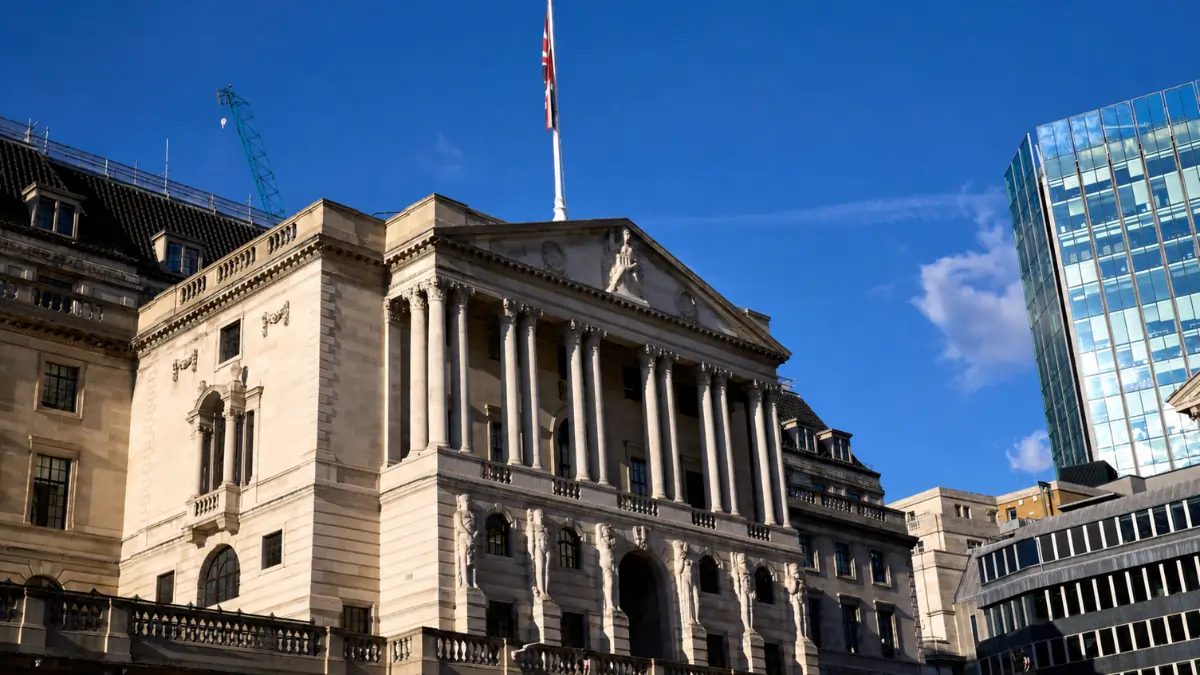
The Bank of England held interest rates at 3.75% at its April meeting, leaving borrowing costs unchanged for a third consecutive time as the Monetary Policy Committee weighed the ongoing economic fallout from Iran's energy shock.
The MPC voted eight to one in favour of holding rates. Huw Pill, the Bank's chief economist, cast the sole dissenting vote, backing an immediate quarter-point increase to address what he described as upside risks to price stability, according to the minutes published on Thursday.
Governor Andrew Bailey told reporters after the decision that 3.75% represented a reasonable position given the state of the economy and the unpredictability of events in the Middle East. He was careful to stress that the Bank was not sending any hidden signal that rates would rise, telling journalists the MPC was not attempting to communicate secretly.
Oil prices surpassed $125 a barrel at one point during the session, reflecting the ongoing disruption to energy supplies following the effective closure of the Strait of Hormuz after the US-Israeli military strikes on Iran in late February. The Bank had abandoned its earlier plans to continue cutting rates in March when that conflict began reshaping the global energy outlook. Tezons has been tracking the Bank of England rate decisions closely as the MPC grapples with competing pressures on the Business environment.
Despite the eight-to-one vote, the minutes revealed a committee growing more divided. Several members who voted to hold indicated they were prepared to support rate increases at future meetings if the evidence warranted it.
External member Megan Greene said a rate rise may be necessary in upcoming meetings. Fellow external member Catherine Mann went further, indicating she expected rises if inflation readings and market expectations continued to climb. The contrasting positions illustrate how the MPC is navigating between those who want to act pre-emptively and those who prefer to wait for firmer data before changing course.
Official figures showed inflation accelerating to 3.3% in March, driven by rising petrol prices. The rate represents a meaningful overshoot of the Bank's 2% target and has intensified the internal debate. The MPC has already flagged that wage- and price-setting behaviour could embed higher inflation if energy disruption persists.
In place of its usual central forecast, the Bank set out three scenarios for how the conflict might affect the economy. Its middle path, labelled Scenario B, envisages higher and more persistent energy costs and suggests at least two interest rate increases may be needed over the coming year to return inflation to target. Bailey nevertheless noted that the tightening already seen in financial markets since March might be sufficient to do some of that work, potentially reducing the need for the MPC to raise rates formally. The Bank's previous hold decision had also flagged inflation risks from global uncertainty, though the scale of the current disruption goes well beyond what policymakers were then anticipating.
Following the decision, the probability implied in derivative markets of a quarter-point rate rise at the MPC's June meeting fell to around 50%, down from approximately 70% before the announcement. Two-year gilt yields, which move in response to interest rate expectations, declined 0.12 percentage points to 4.47%, with yields moving inversely to prices.
Bailey had been under pressure to manage market expectations carefully. After the March meeting he was required to talk down speculation about multiple rapid rate rises, and the April decision appeared designed to preserve flexibility without ruling out tightening.
The MPC also stressed that whatever path energy prices took, the Bank's primary responsibility remained returning inflation to 2% once the initial price-level impact of the conflict had worked through the economy. Members acknowledged that the timeline for achieving that would depend substantially on how the Middle East situation developed.
What This Means for UK Borrowers and Mortgage Holders
The Bank's decision to hold for a third consecutive meeting provides temporary relief for variable-rate mortgage holders and those approaching renewal, though the committee's increasingly divided stance signals that rate stability cannot be assumed. With inflation at 3.3% and energy costs still elevated by the Hormuz disruption, the path back to cuts that many borrowers had anticipated earlier this year now looks materially longer. For businesses carrying floating-rate debt, the more significant risk is that persistent energy inflation forces the MPC's hand in June or beyond, potentially reversing some of the easing delivered since 2024.
LATEST NEWS
Satellites and AI used to track UK hedgehogs in bid to slow decline
Elon Musk keeps losing in court. He shows no sign of stopping
Paramount hires first consumer AI chief as Ellison bets on tech
MORE FROM NEWS

.webp)


RELATED






Subscribe for updates
Get the insights, tools, and strategies modern businesses actually use to grow. From breaking news to curated tools and practical marketing tactics, everything you need to move faster and smarter without the guesswork.
Success! Check your Inbox!

Tezons Newsletter
Get curated tools, key business news, and practical insights to help you grow smarter and move faster with confidence.
Latest News




Have a question?
Still have questions?
Didn’t find what you were looking for? We’re just a message away.