Starbucks Deploys AI and Automation to Reverse Sales Decline
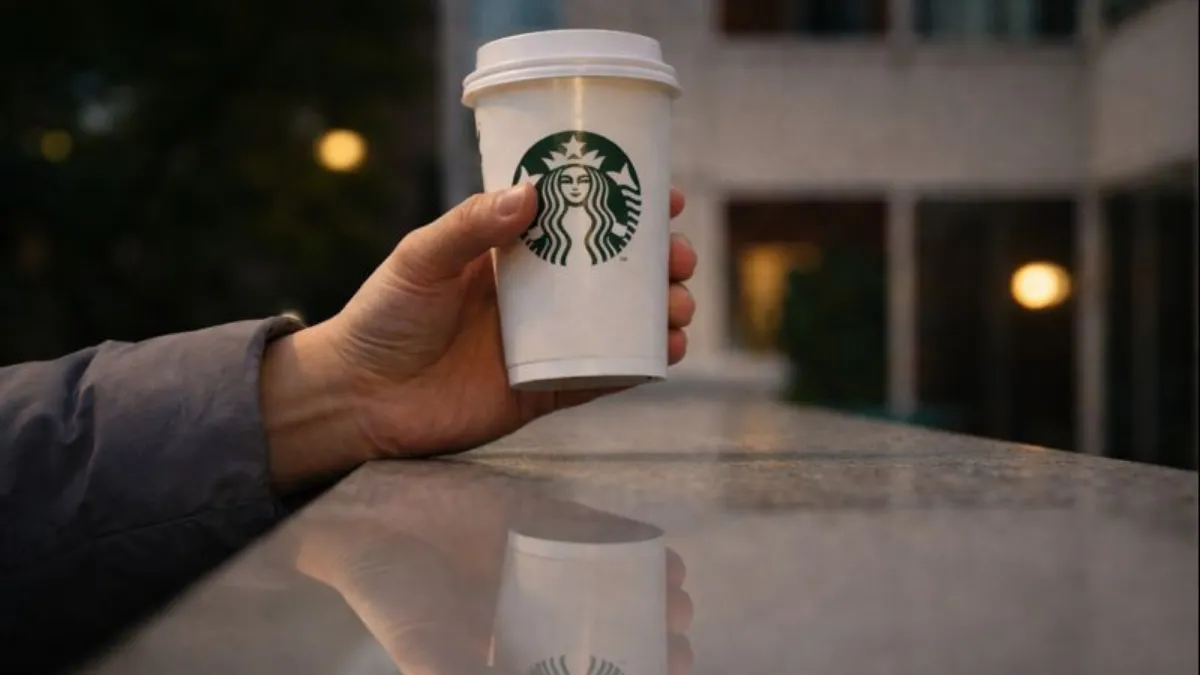

Starbucks is turning to artificial intelligence and automation as central pillars of its recovery strategy, with the technology now appearing across multiple touchpoints in its operations.
Customers at select outlets may find their drive-through orders processed by AI systems rather than human staff, whilst baristas inside benefit from digital assistants that provide recipe guidance and scheduling support. The chain has also introduced automated inventory scanning in stockrooms, eliminating a labour-intensive task that previously contributed to product availability issues.
These technological deployments form part of a substantial investment programme running into hundreds of millions of dollars, undertaken as the Seattle-based company seeks to rebuild momentum following consecutive years of declining performance.
The approach appears to be yielding results. Starbucks disclosed last week that comparable store sales in the United States rose for the first time in two years. The domestic market represents approximately 70 per cent of total company revenue and remains its most significant operational territory.
However, investors responded cautiously to the announcement, sending shares down 5 per cent on concerns that the company's spending commitments, including £363 million allocated to workforce expansion are compressing profit margins.
Brian Niccol, who leads the company as chief executive, maintains that sustained sales recovery will eventually resolve profitability pressures. With Starbucks targeting £1.45 billion in cost reductions over the coming three years, technology investment has become essential to converting improved sales into stronger bottom-line performance.
"I really do believe we've got the right plan in place," Niccol stated.
The executive joined Starbucks in 2024 during a turbulent period for the business. Consumer resistance had mounted following repeated price adjustments, competitive intensity had increased, and the brand confronted boycott campaigns linked to labour disputes with unionised baristas and its position regarding the Israel-Gaza conflict.
Niccol, aged 52, had previously earned industry recognition for successfully repositioning Chipotle Mexican Grill. Upon arrival, he moved swiftly to implement operational changes.
Price increases were suspended, the menu underwent simplification, and a four-minute order completion standard was established for baristas. The company also eliminated several thousand corporate positions, shuttered underperforming locations, and divested a substantial portion of its Chinese operations.
Despite these concrete actions, Niccol frames the company's difficulties in broader cultural terms. He characterises Starbucks as having drifted from its founding identity as a neighbourhood gathering place, becoming overly preoccupied with financial metrics and operational optimisation.
"We lost our focus because we got a little too distracted on efficiency and technology, and lost, I think, our focus on experience, customer and connection," the former Miami University student explained.
"The business is not an average business. The business is a coffee shop-by-coffee shop business."
Industry impact and market implications
Starbucks' technology-led recovery strategy reflects broader trends reshaping the quick-service restaurant sector, where labour costs and operational efficiency have become critical competitive factors. The company's deployment of AI for order-taking and inventory management could establish new operational standards across the industry, particularly as other chains face similar pressures around staffing expenses and service consistency.
The financial market's negative reaction to improved sales figures underscores investor expectations that technology investments must translate into margin expansion, not merely revenue growth. With £1.45 billion in planned cost savings, Starbucks is signalling that automation will increasingly substitute for human labour in routine tasks, potentially influencing employment patterns across the hospitality sector.
The company's simultaneous emphasis on restoring "community coffeehouse" identity whilst advancing automation presents a strategic tension that competitors will observe closely. Success could validate a hybrid model balancing technological efficiency with experiential retail; failure might suggest limits to automation in customer-facing food service environments.
Starbucks' performance in its dominant US market will likely influence strategic decisions at rivals including Dunkin', Costa Coffee, and emerging specialty chains competing for shifting consumer spending in a price-sensitive environment.
More AI & Tech News




.webp)


Subscribe to Stay in the loop
Get the latest AI and technology news, honest tool reviews, and practical guides delivered straight to your inbox.
Success! Check your Inbox!

Tezons Newsletter
The latest technology news, in-depth tool reviews, and practical guides - curated and delivered to your inbox.
Latest News


Have any questions?
Didn’t find what you were looking for? We’re just a message away.