Warner Bros Discovery Becomes Target of Rival Bids from Netflix and Paramount
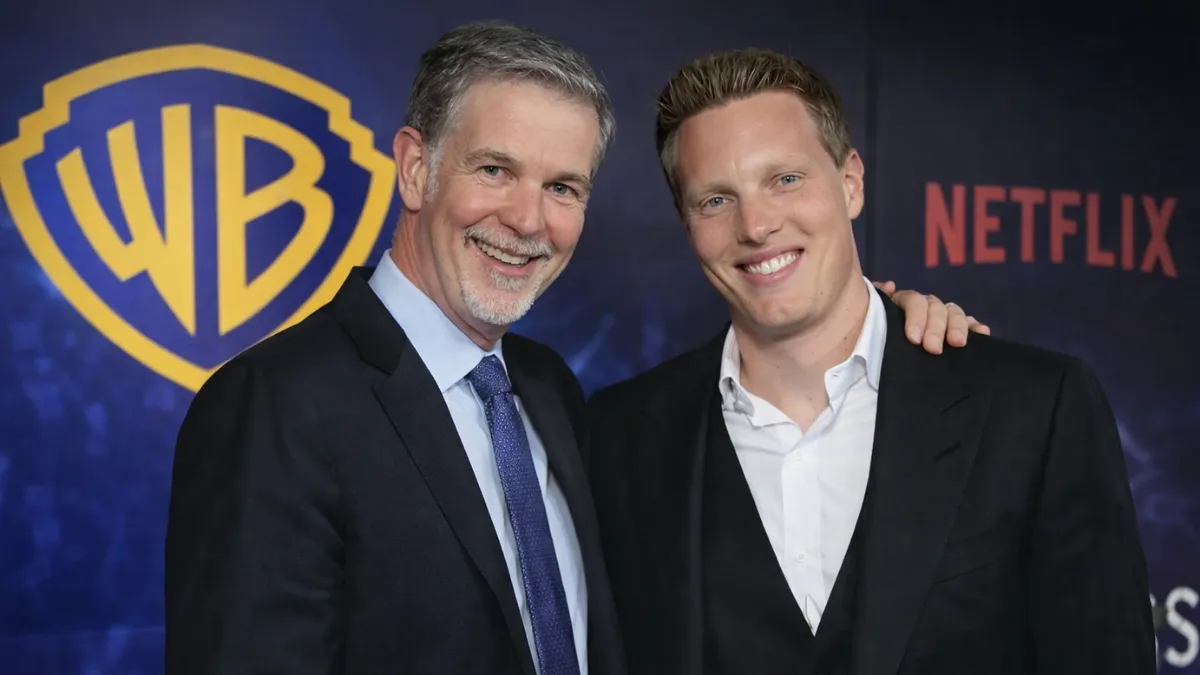

- Warner Bros Discovery is at the centre of competing takeover proposals from Netflix and Paramount Skydance, with the studio having initially agreed to sell certain assets to Netflix before Paramount submitted a rival bid
- Paramount Skydance, backed by the Ellison family, views a combination with Warner Bros as strategic positioning against dominant streaming rivals Netflix and Disney
- Warner Bros Discovery initially rejected Paramount's overtures before the competitive dynamic shifted as both suitors refined their proposals
Two major entertainment corporations are vying to acquire Warner Bros Discovery, setting the stage for one of Hollywood's most significant takeover battles in recent years.
Warner Bros Discovery finds itself at the centre of competing proposals from Netflix and Paramount Skydance, each seeking control of the media conglomerate as traditional broadcasters face mounting pressure from streaming platforms.
Paramount Skydance, supported by the Ellison family's substantial financial backing, has pursued Warner Bros Discovery for several months. The company views a combination with the established studio as strategic positioning against dominant streaming rivals including Netflix and Disney.
Warner Bros Discovery initially rejected these overtures before reaching an agreement to divest its most lucrative assets, the studio operations and streaming platforms—to Netflix.
Following this announcement, Paramount chief executive David Ellison initiated an unsolicited takeover approach, appealing directly to Warner Bros Discovery shareholders rather than negotiating with company leadership.
This manoeuvre represents what corporate finance terms a hostile acquisition—an attempt to purchase a company without management approval, typically achieved by making offers directly to shareholders. Such approaches contrast with agreed transactions where both boards reach mutual consent.
According to corporate filings referenced in industry coverage, Paramount pursued this route after concluding that Netflix was not engaging substantively with recent proposals.
Netflix's proposition centres on acquiring the studio and streaming operations whilst allowing remaining assets to operate as a separate entity. The offer assigns an $82.7 billion valuation to these holdings, which encompass Warner Bros, New Line Cinema, and HBO Max, with debt included in that figure.
Netflix has proposed $27.75 per share in cash, improving upon an earlier bid that combined cash with equity in the restructured business.
Paramount's alternative seeks ownership of Warner Bros Discovery in its entirety, including legacy pay-television networks widely regarded as declining assets. This proposal values the complete company at $108.4 billion.
Paramount has structured its offer as $30 per share, paid entirely in cash, arguing this provides shareholders greater certainty compared with Netflix's approach. The company has added further inducements, including commitment to cover the $2.8 billion termination fee Warner Bros Discovery would owe Netflix should that transaction collapse.
Both potential transactions contemplate completion timelines extending several months into the future.
Industry impact and market implications
This competitive bidding situation reflects broader consolidation trends reshaping the entertainment sector as companies seek scale to compete in streaming-dominated markets. Warner Bros Discovery's willingness to entertain offers signals recognition that standalone operations face increasing challenges against vertically integrated competitors.
Netflix's selective interest in studio and streaming assets suggests a strategy focused on content production capabilities whilst avoiding legacy broadcast infrastructure. Should this transaction proceed, it would significantly expand Netflix's in-house production capacity and intellectual property portfolio, potentially strengthening its competitive position against Disney and Amazon.
Paramount's pursuit of the entire company, including traditional television networks, indicates confidence in extracting value from these assets or belief that scale across distribution channels remains strategically valuable. A successful acquisition would create a substantially larger media entity, though integration challenges and debt levels would require careful management.
The hostile takeover approach introduces uncertainty regarding transaction completion and may prompt Warner Bros Discovery to seek additional bidders or reconsider its strategic options. Shareholder response will likely determine whether management can maintain its preferred course or must engage more substantively with Paramount's proposal.
Regardless of outcome, this battle demonstrates how rapidly streaming economics are forcing reconfiguration of entertainment industry structure, with companies choosing between targeted asset sales and full mergers to achieve necessary scale.
LATEST NEWS
Satellites and AI used to track UK hedgehogs in bid to slow decline
Elon Musk keeps losing in court. He shows no sign of stopping
Paramount hires first consumer AI chief as Ellison bets on tech
MORE FROM NEWS

.webp)


RELATED






Subscribe for updates
Get the insights, tools, and strategies modern businesses actually use to grow. From breaking news to curated tools and practical marketing tactics, everything you need to move faster and smarter without the guesswork.
Success! Check your Inbox!

Tezons Newsletter
Get curated tools, key business news, and practical insights to help you grow smarter and move faster with confidence.
Latest News



Have a question?
Still have questions?
Didn’t find what you were looking for? We’re just a message away.