OpenAI in early talks to give US government 5% stake
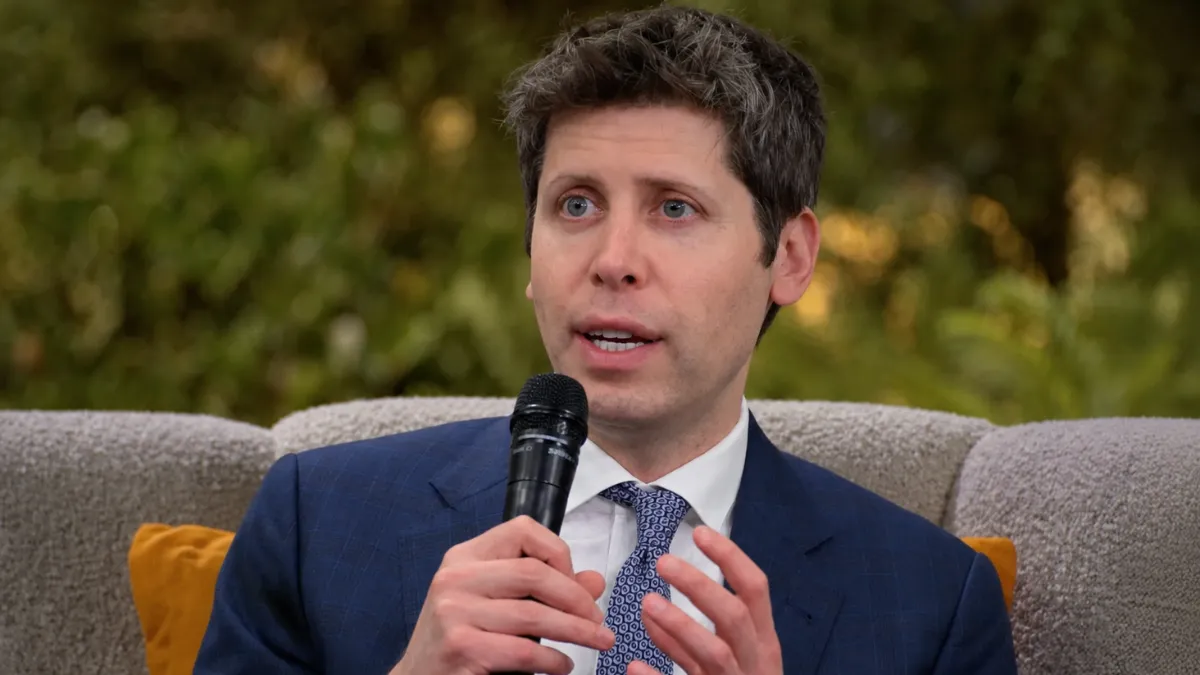

- OpenAI is in early talks to give the US government a 5% equity stake in the company
- Anthropic, Google and Meta could face similar requests to hand over matching stakes
- Senator Bernie Sanders is pushing a rival sovereign wealth fund financed through a 50% tax on AI company stock
OpenAI is in early stage talks to hand the US government a 5% stake in the company, as artificial intelligence developers work to smooth relations with the Trump administration.
Sam Altman, the OpenAI chief executive, has argued that a government stake is the clearest way to share the financial benefits of AI with the American public. The Financial Times reported that two people familiar with the discussions described the talks as conceptual and at an early stage. Any formal arrangement would likely need an act of Congress before it could take effect.
The suggestion follows growing political pressure on Silicon Valley to demonstrate broader public benefit from an AI boom that has concentrated enormous wealth in a small number of companies.
The proposal is not limited to OpenAI. Other large US AI developers could be asked to hand over a similar 5% stake, according to the FT:
- Anthropic
- Meta
None of those companies has said publicly whether it would agree to the plan. Altman has suggested the stakes could flow into an investment vehicle modelled on the Alaska Permanent Fund, a sovereign fund that channels US oil wealth into stocks and pays annual dividends to state residents.
The talks land during a period of heightened scrutiny between Washington and the AI sector. The government ordered Anthropic to restrict access to its newest model for foreign nationals last month on national security grounds, before restoring customer access days later once its concerns were resolved. A government equity stake in OpenAI would mark a different form of intervention: financial rather than regulatory, and one both sides have floated voluntarily rather than imposed.
.webp)
Altman has held separate conversations about public ownership with senior US officials, according to the FT:
- President Trump
- Commerce secretary Howard Lutnick
- Treasury secretary Scott Bessent
He has also spoken with the Democratic senator Bernie Sanders in recent weeks, according to the same sources.
Sanders has pushed a different route to the same goal. The senator wants a sovereign wealth fund overseen by an independent commission, financed through a one-off 50% tax on the stock of the largest AI companies. That plan and Altman's voluntary equity offer aim to solve the same political problem: public unease at a handful of AI firms capturing enormous wealth. The two sit on opposite sides of a basic divide.
- Sanders' plan is mandatory and tax-based, applied regardless of company consent
- Altman's proposal is voluntary and framed as equity-sharing rather than taxation
- Both would require an act of Congress before either could take effect
Neither OpenAI nor Anthropic has ruled out backing a public fund in the past. Both companies have said in policy papers that a public or sovereign wealth vehicle may eventually be needed to distribute AI-driven gains to the public. In April, OpenAI said such a fund could give every citizen, including people with no money in financial markets, a stake in AI-driven economic growth.
Smaller AI developers outside the group named in the FT report face a different calculus. A firm the size of Anthropic or Google can absorb the loss of 5% equity without threatening operations, but a mid-sized AI startup asked to match the same terms could see its funding round economics change substantially. No policymaker has yet indicated whether the proposal would extend beyond the largest players.
The stake proposal also arrives as OpenAI and Anthropic prepare separate stock market listings that some investors believe could value each company at more than $1tn. A government stake agreed before either listing would let Washington capture a share of that valuation growth from the outset, rather than buying in later at a market price once shares begin trading.
OpenAI has previously set out plans to scale its compute spending toward $600bn by 2030, a target that shows how much capital the company expects to raise and deploy in the coming years. A 5% government stake in a business of that projected size would represent a substantial transfer of value, even without a formal valuation attached to the current talks.
Anthropic's own assistant, Claude, sits among the products that could be affected if the company agrees to a matching pledge. Anthropic has not commented publicly on whether it would accept the same terms. The company has previously resisted government pressure it viewed as overreach, most visibly during last month's access dispute, which suggests any equity request could face similar scrutiny inside the business before it reaches a decision.
For now, the arrangement remains conceptual. No timeline has been set for Congress to consider legislation, and neither the Trump administration nor OpenAI has confirmed the structure of any potential deal. Sanders' rival tax proposal remains before Congress with no vote scheduled, and lawmakers have shown little appetite so far for fast-moving AI legislation of either kind.
More AI & Tech News



.webp)

Subscribe to Stay in the loop
Get the latest AI and technology news, honest tool reviews, and practical guides delivered straight to your inbox.
Success! Check your Inbox!

Tezons Newsletter
The latest technology news, in-depth tool reviews, and practical guides - curated and delivered to your inbox.
Latest News




Have any questions?
Didn’t find what you were looking for? We’re just a message away.