OpenAI Revises Compute Spending Target to $600 Billion by 2030
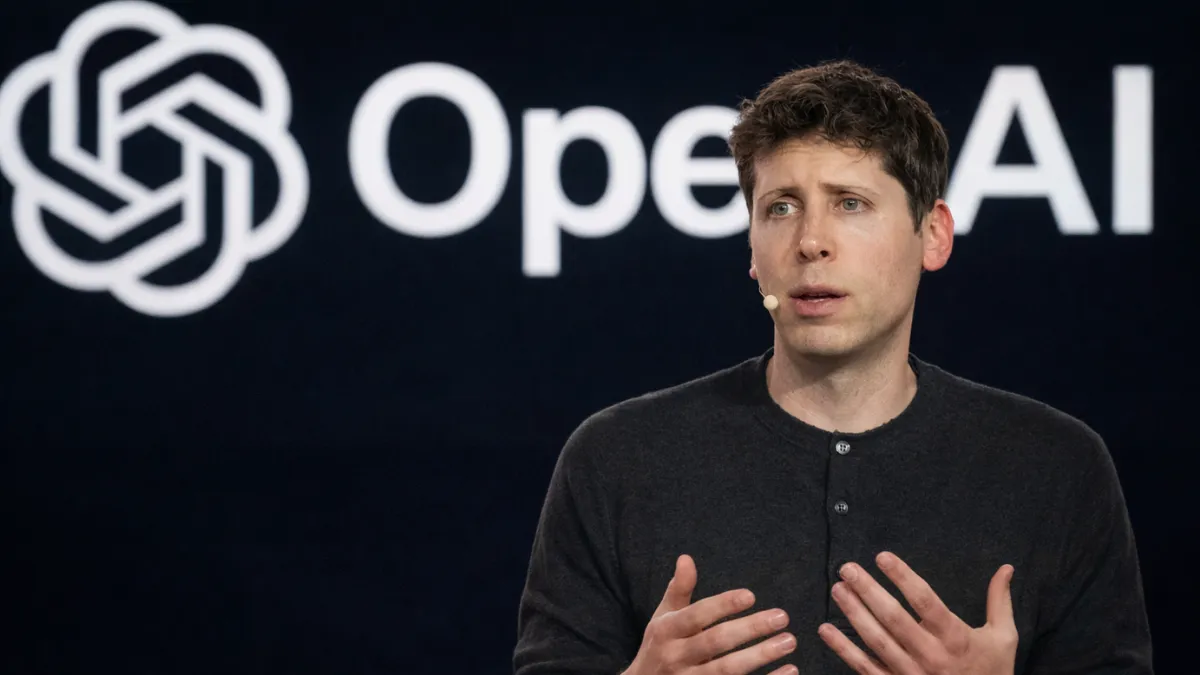

OpenAI has revised its compute spending expectations downward, now targeting approximately $600 billion in total infrastructure investment by 2030. The figure marks a significant reduction from the $1.4 trillion in infrastructure commitments that chief executive Sam Altman highlighted in earlier communications, and reflects a broader effort by the company to align its capital plans more closely with realistic revenue forecasts.
The revised target has been communicated to investors in recent months, with sources familiar with the matter indicating that the updated figure comes with a more clearly defined timeline than previous projections. Concerns had been growing among some investors that OpenAI's expansion ambitions outpaced the revenue growth needed to justify them.
Alongside the revised compute target, OpenAI is projecting total revenues exceeding $280 billion by 2030, with roughly equal contributions from its consumer and enterprise divisions. The company's current financial position already shows meaningful progress: revenues reached $13.1 billion in 2025, ahead of an internal target of $10 billion. Operating costs came in at $8 billion, below the $9 billion forecast, suggesting some early progress in managing expenditure relative to growth.
OpenAI is currently finalising a fundraising round that could exceed $100 billion, with approximately 90 per cent of the capital expected to come from strategic investors. Nvidia is in discussions to contribute up to $30 billion as part of the round, which is understood to value OpenAI at $730 billion on a pre-money basis. SoftBank and Amazon are also among the strategic investors participating.
The fundraising round comes after OpenAI announced a series of significant infrastructure partnerships in the latter half of last year, involving leading chipmakers and cloud computing providers.
ChatGPT, the conversational AI product that propelled OpenAI into public prominence following its launch in late 2022, now counts more than 900 million weekly active users, up from 800 million as of October. The company had declared an internal priority in December to accelerate improvements to the product amid growing competition from Google and Anthropic, after a period of slower user growth in the autumn. Usage has since recovered, with both weekly and daily active user counts reaching record levels.
OpenAI's coding assistant, Codex, has also gained traction, surpassing 1.5 million weekly active users. The product competes directly with Anthropic's Claude Code, which has experienced strong adoption over the past year. The coding tools segment has emerged as a key battleground among AI companies seeking enterprise and developer market share.
OpenAI was established in 2015 as a nonprofit research organisation before evolving into a capped-profit structure and, more recently, pursuing a broader commercial restructuring to support its growth ambitions.
Industry Impact and Market Implications
OpenAI's decision to revise its compute spending target downward carries implications beyond the company's own balance sheet. For the broader AI infrastructure market, it signals a potential recalibration in how leading AI developers communicate capital intentions to investors, particularly as valuations across the sector face closer scrutiny.
The original $1.4 trillion figure, while partly aspirational and tied to broader ecosystem commitments, contributed to an environment of extraordinary expectations around AI infrastructure demand. A more measured $600 billion target with a defined end date may prompt data centre operators, chipmakers, and cloud providers to reassess the pace at which capacity build-out will be required. Nvidia, which is simultaneously in discussions to invest in OpenAI and remains its primary supplier of AI accelerators, sits in an unusual dual position as both a financial stakeholder and infrastructure dependency.
The revenue projection of $280 billion by 2030 is also notable. Reaching that figure would require OpenAI to sustain multi-year compound growth at rates that, while not without precedent in technology, have rarely been achieved at this scale. The near-equal split projected between consumer and enterprise revenue reflects a strategic intent to diversify away from reliance on any single market segment, reducing exposure to competitive pressure in either.
The coding tools market, represented here by Codex, is emerging as a commercially significant arena. As AI-assisted software development becomes embedded in professional workflows, the user base for products in this category is likely to expand substantially. Competition between OpenAI, Anthropic, and others in this segment may intensify pricing pressure while accelerating feature development, ultimately benefiting developers but compressing margins for providers.
For investors, the revised figures represent a more defensible narrative. Tying capital expenditure to revenue trajectories, rather than to broader ecosystem aspirations, may strengthen OpenAI's position in closing its current funding round and in any future public market consideration.
More AI & Tech News




.webp)


Subscribe to Stay in the loop
Get the latest AI and technology news, honest tool reviews, and practical guides delivered straight to your inbox.
Success! Check your Inbox!

Tezons Newsletter
The latest technology news, in-depth tool reviews, and practical guides - curated and delivered to your inbox.
Latest News




Have any questions?
Didn’t find what you were looking for? We’re just a message away.