US and Israel Launch Major Military Strikes Against Iran in Joint Operation
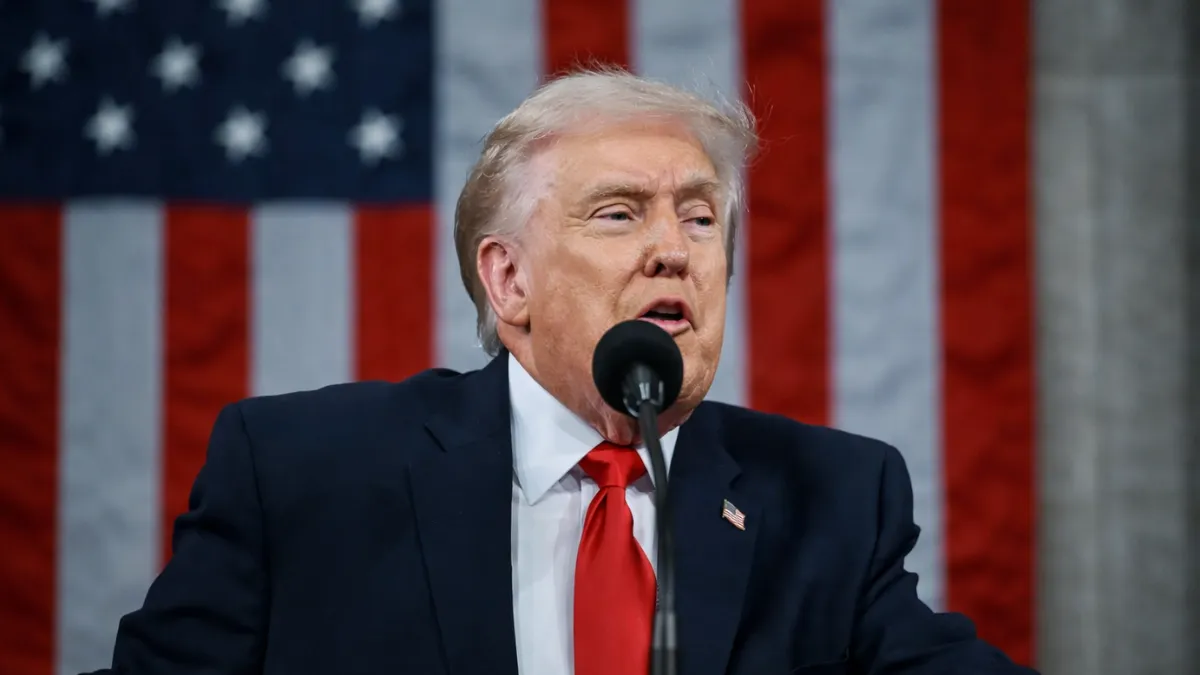

- The United States and Israel launched coordinated military strikes against Iran on 28 February 2026 in an operation named Operation Epic Fury
- Iran launched retaliatory strikes against US military bases across multiple Gulf states including Qatar, the UAE, Kuwait, and Bahrain, with missile interceptions confirmed
- Mediated talks in Oman had reportedly made significant progress just hours before the strikes were launched, raising questions about Washington's approach to diplomacy
In the early hours of Saturday 28 February 2026, the United States and Israel launched coordinated military strikes against Iran, marking one of the most significant escalations in Middle Eastern tensions in decades. President Donald Trump announced the operation in a video statement, declaring that American forces had begun "major combat operations" against the Iranian regime.
The operation, which the US Department of Defense has named "Operation Epic Fury," is focused on eliminating what the Trump administration describes as imminent threats to American national security.
In his address, Trump cited nearly five decades of hostility from the Iranian government towards the United States, referencing the 1979 hostage crisis, the 1983 Marine barracks bombing in Beirut, and more recent proxy attacks in the Middle East. He described the Iranian regime as the world's foremost state sponsor of terrorism and said diplomatic efforts to curtail its nuclear programme had repeatedly failed.
Trump stated that the operation would target Iran's missile capabilities, naval forces, and what he referred to as its "terrorist proxies," vowing to destroy the country's missile industry entirely and eliminate its naval power. He also reaffirmed that under no circumstances would Iran be permitted to obtain a nuclear weapon.
This strike follows an earlier US operation in June 2025, referred to as "Operation Midnight Hammer," which targeted Iran's nuclear facilities at Fordow, Natanz, and Isfahan. A later assessment found that the June strikes only destroyed one of the three sites targeted, and there is no publicly available evidence that Iran has since made significant progress in reviving its nuclear programme.
Israeli Prime Minister Benjamin Netanyahu confirmed that Israeli fighter jets were striking dozens of military targets across Iran in full coordination with US forces, describing the goal as removing the existential threat posed by the Iranian regime.
Iran responded swiftly. Iranian forces launched retaliatory strikes targeting Israel and US military assets across multiple Middle Eastern countries, including Qatar, the United Arab Emirates, Kuwait, Bahrain, Syria, Jordan, and Iraq. Explosions were reported in Tehran's Pasteur district, near the compound housing the residence and offices of Supreme Leader Ayatollah Ali Khamenei, as well as in several other Iranian cities.
Iran's Supreme National Security Council issued a statement warning that its armed forces would deliver a "crushing response" to the attacks, while the International Committee of the Red Cross cautioned that the escalation risked igniting a dangerous chain reaction across the region with potentially devastating consequences.
The strikes came just hours after Oman's foreign minister, who had been mediating negotiations between Washington and Tehran, indicated that the two sides had made "significant progress" in their latest round of talks.
In his statement, Trump addressed the Iranian public directly, urging civilians to remain indoors and telling them that once the operation concluded, they should seize control of their own government. He also called on members of Iran's Islamic Revolutionary Guard Corps to surrender, offering immunity to those who complied.
Trump acknowledged that US casualties were possible, saying American service members could be at risk as the operation unfolded, but described the mission as necessary to protect future generations.
Israel has closed its airspace to all passenger flights, a 48-hour state of emergency has been declared nationwide, and air raid sirens have sounded across multiple Israeli cities, with authorities directing civilians to take shelter.
The situation remains fast-moving. Casualty figures are still being established, the full scope of Iranian retaliation is not yet confirmed, and regional governments are on high alert. Tezons will continue to update this story as developments unfold.
Global Significance and Wider Impact
The launch of joint US-Israeli military operations against Iran represents a watershed moment in Middle Eastern geopolitics with consequences that extend far beyond the region.
Iran occupies a strategically critical position, bordering Iraq, Afghanistan, and the Caspian Sea, and sits astride vital shipping lanes including the Strait of Hormuz, through which a significant portion of the world's oil supply passes. Any prolonged conflict risks severe disruption to global energy markets, potentially driving up oil and gas prices at a time when many economies are still managing inflationary pressures.
The scale of Iranian retaliation, targeting US bases across multiple Gulf states simultaneously, signals a broader regional conflict is underway. US allies including Bahrain, Qatar, Kuwait, and the UAE host major American military installations and have now found themselves directly in the line of fire. The involvement of these nations, even as defensive participants, complicates the diplomatic landscape considerably and could force Gulf governments into difficult choices between their security partnerships and their own stability.
Regionally, the strikes risk destabilising neighbouring Iraq, where Iranian-backed militias hold considerable influence, and could reignite tensions with Lebanese Hezbollah, Houthi forces in Yemen, and other Iranian proxy networks. The Red Cross warning about a "dangerous chain reaction" reflects the assessment of neutral international bodies that the conflict could spiral well beyond its current parameters.
From a diplomatic standpoint, the timing is striking. Mediated talks in Oman had reportedly been progressing, and the decision to proceed with strikes despite reported diplomatic momentum will raise serious questions among international partners about Washington's commitment to negotiated solutions. It may also complicate future diplomatic engagement across the region and beyond.
For Iran, the targeting of its supreme leader's compound, military infrastructure, and naval assets suggests the operation's ambitions extend to regime change, not merely deterrence. How the Iranian government, military, and population respond in the days ahead will shape the next phase of this conflict significantly.
The international community, including European governments, China, Russia, and the United Nations, will be watching closely. Responses from these actors, particularly any emergency Security Council proceedings, will determine whether this conflict remains bilateral or draws in wider global powers.
LATEST NEWS
Satellites and AI used to track UK hedgehogs in bid to slow decline
Elon Musk keeps losing in court. He shows no sign of stopping
Paramount hires first consumer AI chief as Ellison bets on tech
MORE FROM NEWS

.webp)


RELATED




Subscribe for updates
Get the insights, tools, and strategies modern businesses actually use to grow. From breaking news to curated tools and practical marketing tactics, everything you need to move faster and smarter without the guesswork.
Success! Check your Inbox!

Tezons Newsletter
Get curated tools, key business news, and practical insights to help you grow smarter and move faster with confidence.
Latest News


Have a question?
Still have questions?
Didn’t find what you were looking for? We’re just a message away.