Precious Metals Surge as Economic Uncertainty Drives Record Investment
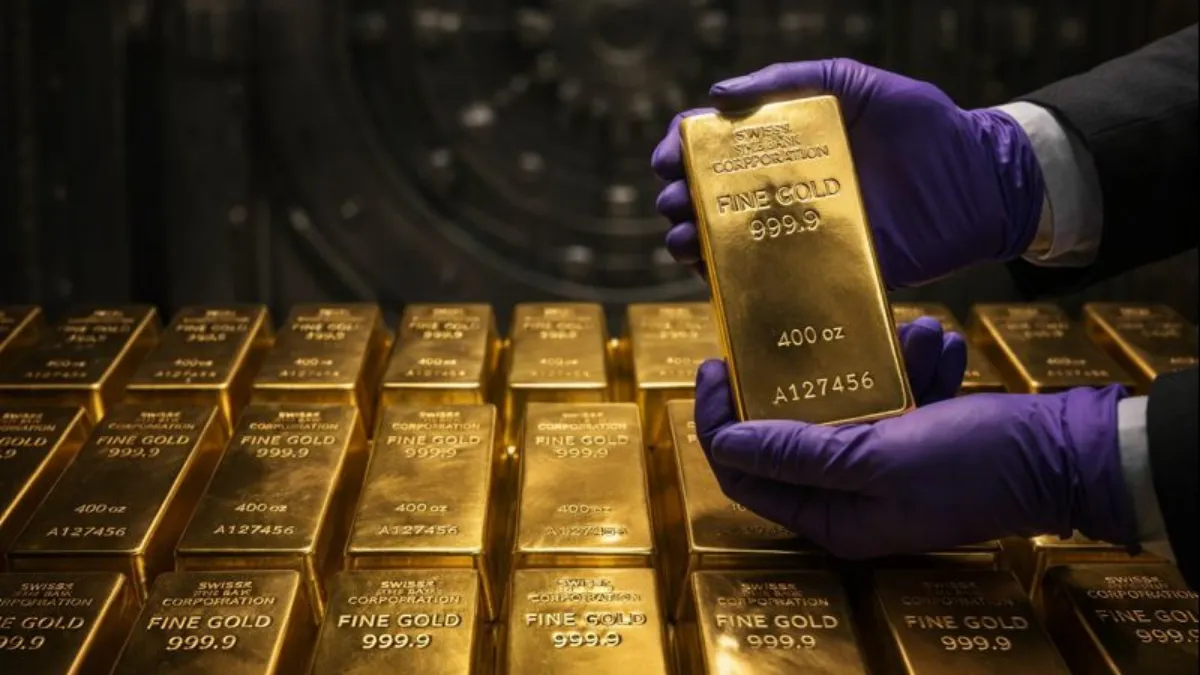

- Gold climbed more than 25 per cent in a single month to touch $5,595 per ounce before retreating to $5,250, nearly doubling in value since January 2025
- Silver quadrupled in price to reach highs above $120 per ounce during the same period, with analysts warning the scale of the rally bore characteristics of speculative excess
- Central bank purchasing, US trade policy uncertainty, and geopolitical conflict were identified as the primary structural drivers sustaining the precious metals rally beyond normal safe-haven demand
Investment in precious metals has reached unprecedented levels as global economic turbulence intensifies throughout early 2026, with gold and silver posting extraordinary gains that analysts warn bear characteristics of speculative excess.
Gold's ascent began in mid-2025 and has accelerated dramatically, climbing more than 25% this month alone before touching $5,595 per ounce on Thursday. Though prices retreated to $5,250 following speculation regarding potential military action in the Middle East, the precious metal's value has nearly doubled since January 2025, when the current US administration took office.
Silver's trajectory has proved even more dramatic. Trading below $30 per ounce in April 2025, ahead of major tariff announcements, the metal has since surged almost fourfold to exceed $118 per ounce, with the steepest gains concentrated in recent weeks.
Market strategists have flagged concerns about the velocity of price movements. Giuseppe Sersale of Italian firm Anthilia characterised recent trading patterns as exhibiting "all the hallmarks of a mania", noting the parabolic nature of price action.
The precious metals rally reflects multiple converging factors. Traditional safe haven demand has intensified as investors navigate heightened geopolitical tensions and unconventional policy approaches from Washington. Aggressive trade measures, including sweeping tariffs on international partners, combined with diplomatic provocations and unusual pressure on monetary authorities, have prompted portfolio managers to seek assets perceived as stores of value.
Recent criticism of Federal Reserve leadership, including legal action against the central bank's chairman Jerome Powell, has raised concerns about institutional independence. Following Wednesday's decision to maintain interest rates, fresh social media attacks emerged from the White House, despite Fed acknowledgement that inflationary pressures have moderated. Economists warn that undermining central bank autonomy risks reigniting price growth.
According to Daniela Hathorn, senior market analyst at Capital.com, precious metal valuations represent "a re-pricing of trust" encompassing currencies, institutions and the broader post-Cold War economic framework.
Whilst gold theoretically hedges against currency devaluation scenarios, alternative digital assets such as bitcoin have not experienced comparable buying pressure, suggesting additional dynamics at play.
Data released this week by the World Gold Council reveals central banks continued accumulating reserves, though purchases declined 21% year-on-year to 863 tonnes in 2025. This ongoing acquisition pattern appears linked to modest diversification from US government securities, as policy volatility raises questions about sovereign debt holdings.
However, institutional buying represents only part of the demand picture. Retail investors have emerged as significant participants, either responding to macroeconomic headlines or momentum-chasing rising prices. Louise Street, senior market analyst at the World Gold Council, noted that 2025 saw "consumers and investors alike" acquiring gold amid persistent economic and geopolitical risks, with "investment demand" dominating as market participants accessed the metal through varied channels.
Retail marketing reflects this trend. The Royal Mint website encourages British consumers to "fortify your financial future with the timeless allure of gold", targeting individual investors.
Silver's recent performance appears intertwined with gold's rally, potentially benefiting from its lower absolute price point which makes entry more accessible to smaller investors.
Currency markets have also reflected shifting sentiment. The US dollar has weakened noticeably, with the euro rising above $1.20 earlier this week before modest retracement, whilst sterling reached $1.38 on Thursday, gaining nearly five cents within a fortnight. UniCredit's Eszter Gárgyán attributed dollar depreciation to "geopolitical risks, rising trade tensions and concerns regarding Fed independence".
The administration has sent mixed signals regarding currency policy. Whilst a weaker dollar might assist efforts to narrow trade imbalances, currency strength traditionally symbolises economic power. After the dollar touched a four-year low against a basket of currencies on Wednesday, the president welcomed the development, stating "I think it's great". However, Treasury Secretary Scott Bessent subsequently reiterated commitment to "a strong dollar policy" when questioned about potential coordinated central bank intervention supporting the Japanese yen.
Japanese government bond yields have risen sharply as markets anticipate increased spending following upcoming elections, adding further complexity to global currency dynamics.
Despite precious metal gains and dollar weakness, US equity markets have performed strongly over the past year, advancing 17.9% including dividends in 2025. Technology stocks, particularly the largest firms benefiting from artificial intelligence investment, have driven disproportionate gains.
Although elevated valuations prompt bubble concerns amongst some analysts and industry executives, investor behaviour suggests continued willingness to participate in rising markets. Expectations of potential interest rate reductions, contingent on controlled inflation, appear to sustain equity appetite.
Unlike brief selling pressure in government securities a year earlier, bond markets have not yet reflected significant capital flight from US assets.
Industry Impact and Market Implications
This precious metals surge carries significant ramifications across multiple sectors and asset classes. Mining companies and precious metal refiners face exceptional profit opportunities, though supply constraints may limit their ability to capitalise fully on elevated prices. Companies with substantial dollar-denominated debt or international revenue exposure must navigate increased currency volatility, potentially affecting reported earnings and hedging strategies.
Financial services firms are experiencing heightened retail investor activity in commodity markets, driving transaction volumes and fee income, whilst asset managers face questions about appropriate portfolio allocations as traditional diversification models are tested. The banking sector confronts challenges related to dollar weakness and potential Federal Reserve policy shifts, with implications for lending margins and treasury operations.
Technology companies, despite equity market strength, face uncertainty if economic instability triggers reduced enterprise spending on artificial intelligence infrastructure or if currency movements affect international competitiveness. Luxury goods manufacturers and retailers dealing in high-value items may benefit from wealth effects amongst investors profiting from precious metal positions, though broader economic anxiety could suppress discretionary spending.
The sustained divergence between equity market performance and safe haven asset accumulation suggests investors are simultaneously positioning for continued growth and potential crisis scenarios. This hedging behaviour indicates underlying uncertainty about economic trajectory despite near-term market optimism.
Central bank reserve diversification, whilst modest, signals potential long-term shifts in global financial architecture, with implications for sovereign debt markets, currency exchange mechanisms and international trade settlement systems. Continued pressure on Federal Reserve independence, combined with unorthodox policy approaches, risks undermining institutional frameworks that have underpinned decades of relative economic stability.
LATEST NEWS
Satellites and AI used to track UK hedgehogs in bid to slow decline
Elon Musk keeps losing in court. He shows no sign of stopping
Paramount hires first consumer AI chief as Ellison bets on tech
MORE FROM NEWS

.webp)


RELATED






Subscribe for updates
Get the insights, tools, and strategies modern businesses actually use to grow. From breaking news to curated tools and practical marketing tactics, everything you need to move faster and smarter without the guesswork.
Success! Check your Inbox!

Tezons Newsletter
Get curated tools, key business news, and practical insights to help you grow smarter and move faster with confidence.
Latest News




Have a question?
Still have questions?
Didn’t find what you were looking for? We’re just a message away.