UK airlines cleared to cancel or consolidate flights over jet fuel shortage
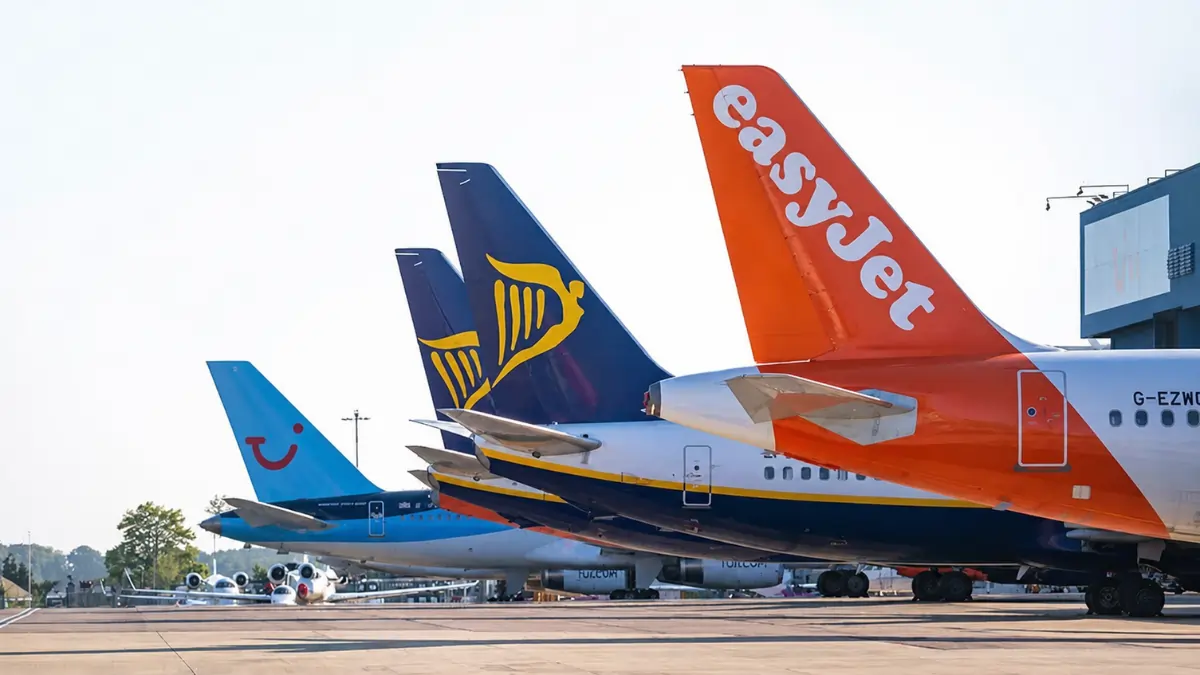

- The UK government has introduced legislation allowing airlines to cancel or consolidate flights at least two weeks in advance without losing their airport takeoff and landing slots
- The UK imports around 65% of the jet fuel it uses, much of which originates from the Middle East, where the Strait of Hormuz has been effectively closed since early March
- Transport Secretary Heidi Alexander convened a meeting with Heathrow, Gatwick, British Airways, Virgin Atlantic and easyJet to coordinate the industry response
UK airlines have been given government approval to cancel or consolidate flights this summer to conserve jet fuel, as conflict in the Middle East continues to restrict supplies reaching British airports. New legislation announced by the transport secretary allows carriers to reduce schedules in advance, giving passengers significantly more notice than they would receive from last-minute cancellations.
The UK airlines cancel flights measure responds directly to the effective closure of the Strait of Hormuz since early March 2026, which has throttled the flow of oil and gas from the region and left European nations warning of serious shortages. The UK imports around 65% of the jet fuel it uses, a substantial proportion of which originates from the Middle East, making British aviation unusually exposed to the current disruption.
The announcement follows a meeting held on the preceding Thursday between Transport Secretary Heidi Alexander and senior representatives from Heathrow and Gatwick airports, as well as British Airways, Virgin Atlantic and easyJet. The talks produced agreement on a framework that Tezons has been tracking as part of broader coverage of the World news category.
How the New Aviation Rules Work
Under the legislation, airlines can give back a limited proportion of their allocated takeoff and landing slots without losing the right to operate those slots in the following season. Under normal slot rules, an airline that cancels flights risks permanently surrendering that capacity, which has historically incentivised carriers to operate near-empty aircraft simply to protect their position at busy airports.
The new framework removes that commercial incentive to run wasteful flights. Airlines will also be permitted to consolidate schedules on routes served by multiple daily departures, merging passenger loads onto fewer aircraft rather than running several flights with low occupancy. All cancellations made under the new provisions must be confirmed at least two weeks in advance, giving affected passengers time to rebook onto comparable services.
Rob Bishton, the chief executive of the UK Civil Aviation Authority, said the relaxation of slot rules would allow airlines more flexibility and he expected carriers to give passengers as much notice as possible of any cancellations during the period.
Flights that have not sold a significant proportion of their seats may also be cancelled to prevent fuel being spent on near-empty departures, according to government ministers.
What the Strait of Hormuz Closure Means for British Fuel Stocks
The Strait of Hormuz, a narrow waterway connecting the Persian Gulf to the Gulf of Oman, is one of the most critical arteries for global oil and gas traffic. Its effective closure since March 2026, following the escalation of conflict in the region, has caused an energy crisis across multiple countries and prompted governments across Europe to make contingency plans for supply shortfalls.
Calculations circulating among European energy authorities suggest only a few weeks of jet fuel supplies remain across the continent if alternative supply routes and domestic refining cannot compensate for the shortfall. The UK is particularly reliant on imports, with approximately 65% of its jet fuel sourced from outside the country, much of it from Middle Eastern refineries.
The situation has also contributed to a sharp rise in fuel costs at UK petrol forecourts, a trend covered in related Tezons reporting on UK fuel hitting £3 a litre at the country's most expensive station in the weeks prior to this announcement.
EU airline industry representatives have separately warned of systemic fuel shortages if the Strait remains closed, with jet fuel prices reaching record levels on international markets. The UK government action mirrors broader European contingency planning, though the specific slot-relief mechanism is particular to British aviation regulation.
Government Position on Supply and Passenger Rights
Transport Secretary Heidi Alexander said there were no immediate supply issues but stressed that the government was taking steps in advance to provide certainty for families planning summer travel. She said the legislation would give airlines the tools to adjust flights in good time if circumstances required, and that the government would do everything it could to insulate the country from the wider impact of the situation in the Middle East.
For passengers, the key protection is the two-week minimum notice requirement. Under existing consumer rules, passengers who receive advance notice of a cancellation remain entitled to rebooking onto an equivalent service or a full refund. The government has indicated that airlines are expected to move affected passengers onto similar flights operating on the same or nearby days, rather than leaving them without options.
The combination of forward-looking cancellations and schedule consolidation is designed to prevent a repeat of the chaotic last-minute disruption that has affected European airports in past summers. The government framed the measures as precautionary rather than reactive, emphasising that action was being taken before any acute crisis materialised at airports.
Airlines participating in the Thursday meeting, including British Airways, Virgin Atlantic and easyJet, are now reviewing their summer timetables to identify routes where consolidation is feasible. Carriers operating multiple daily frequencies on the same route, particularly to popular leisure destinations, are most likely to be in scope for schedule mergers.
The Civil Aviation Authority's involvement signals that the slot relief will be administered through formal regulatory channels rather than left to individual airline discretion. This should provide a consistent standard across carriers and prevent the kind of uneven treatment that can arise when airlines manage disruption independently.
What This Means for UK Summer Travellers
British holidaymakers booking or holding tickets for summer 2026 departures now face a more structured form of uncertainty. Rather than discovering a cancellation at short notice, passengers on affected routes will receive at least a fortnight's warning, giving them time to adjust plans. Airlines are expected to prioritise rebooking onto equivalent services, but travellers on less-served routes or niche destinations may have fewer alternatives available. The broader picture for UK aviation depends heavily on how long the Strait of Hormuz remains closed and whether domestic refinery output and alternative import routes can meaningfully reduce the gap in supply, a situation that continues to evolve across multiple fronts.
LATEST NEWS
Satellites and AI used to track UK hedgehogs in bid to slow decline
Elon Musk keeps losing in court. He shows no sign of stopping
Paramount hires first consumer AI chief as Ellison bets on tech
MORE FROM NEWS

.webp)


RELATED




Subscribe for updates
Get the insights, tools, and strategies modern businesses actually use to grow. From breaking news to curated tools and practical marketing tactics, everything you need to move faster and smarter without the guesswork.
Success! Check your Inbox!

Tezons Newsletter
Get curated tools, key business news, and practical insights to help you grow smarter and move faster with confidence.
Latest News


Have a question?
Still have questions?
Didn’t find what you were looking for? We’re just a message away.