Academy clarifies that AI acting and writing cannot win Oscars
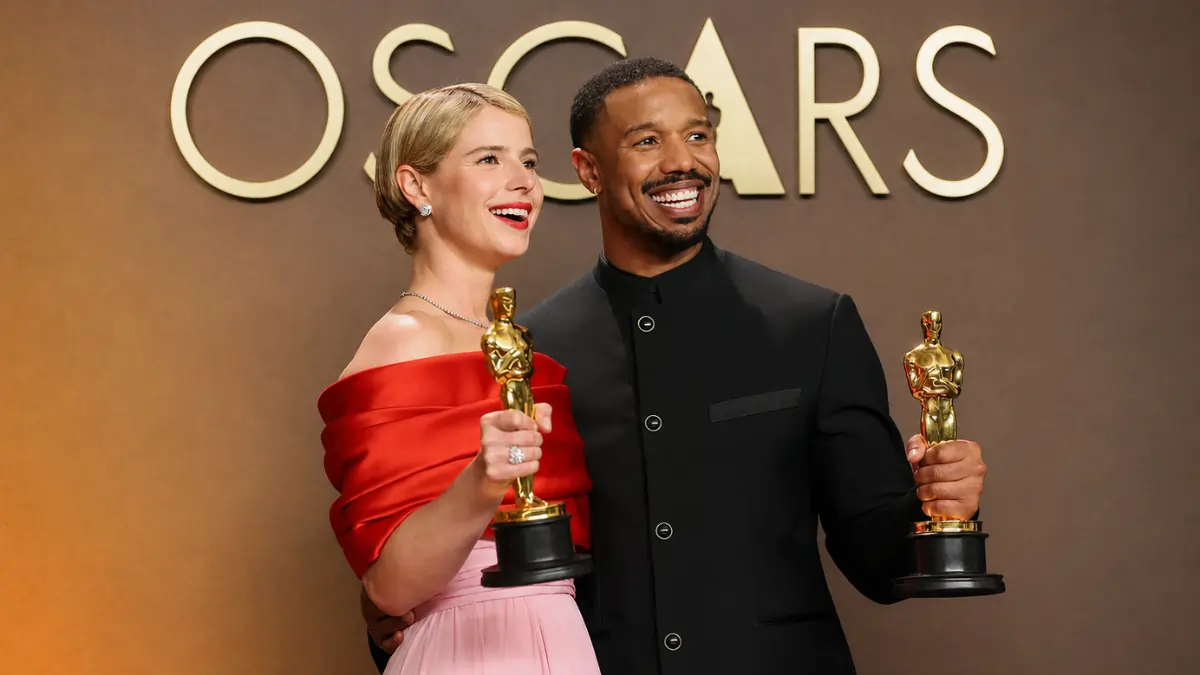

The Academy of Motion Picture Arts and Sciences has updated its eligibility requirements for the Oscars, stipulating that only acting demonstrably performed by humans and writing that is human-authored will qualify for nomination. The Academy described the change as "substantive", reflecting growing pressure on the film industry to define boundaries around AI-generated work.
The updated rules apply specifically to the acting and writing categories. In the Academy's own words, acting must be "demonstrably performed by humans" and writing "must be human-authored" to be considered for an award. No equivalent restriction applies to other areas of film production, such as visual effects, sound design, or editing, where AI tools are increasingly in use.
The decision formalises what was previously assumed but never explicitly stated. Until now, the Academy's eligibility criteria had not needed to distinguish between human and AI-generated creative contributions.
Why Oscar eligibility rules now address AI acting and writing
The update follows a period of notable AI activity across the film industry. The late actor Val Kilmer, who died in 2025, is set to appear in an upcoming film using AI technology to recreate his likeness in a leading role. A London-based actor and comedian also revealed she had constructed a fully synthetic AI performer with the stated ambition of making it a global star.
The use of AI to generate or assist in writing scripts also became a central dispute during the Hollywood writers' strike two years ago, when studios were accused of exploring AI as a replacement for human writers. Those tensions have not fully resolved, and lawsuits from studios, actors, and authors against multiple AI companies over alleged copyright infringement remain active.
The basis of AI tools, including large language models, rests on material created by humans over decades, from text and images to video. This has fuelled debate about whether AI outputs constitute original work or derivative reproduction, and whether those whose work was used in training deserve compensation.
What the updated Academy rules do and do not cover
The Academy has been careful to limit the scope of its new rules. Outside of acting and writing, the organisation stated that AI use in a film production would neither help nor harm a project's chances of receiving a nomination. The framing positions AI as a neutral production tool in most contexts, comparable in principle to other long-standing digital techniques.
Computer-generated imagery, which became standard in filmmaking from the 1990s onwards, is treated as a manually executed process created by human artists. AI tools, by contrast, are designed to generate outputs automatically from simple prompts, bypassing the granular human labour traditionally associated with visual effects work. The Academy appears to have drawn its line at the point where human creative authorship becomes absent or unverifiable rather than at the point where technology is simply in use.
The organisation also reserved the right to seek more information in cases where the use of generative AI raises questions. The statement noted: "The Academy and each branch will judge the achievement, taking into account the degree to which a human was at the heart of the creative authorship when choosing which movie to award." If the Academy deems clarification necessary about AI's role in a given production, it may request detailed disclosures before proceeding.
For more on the industry debate around AI-generated content, see the Tezons report on ByteDance facing legal pressure over its AI video generator.
How filmmakers should interpret the Academy's position
The practical implications for productions currently in development depend heavily on how deeply AI tools have been integrated into writing and performance. Productions using AI to generate initial script drafts, to reconstruct deceased performers, or to create synthetic actors will need to assess whether any resulting work can satisfy the threshold of human authorship and human performance that the Academy now requires for award eligibility.
The Academy's clarification is not a regulatory instrument and carries no legal force beyond its own awards process. Studios and streaming platforms are free to produce AI-driven content without restriction. But the Oscars carry significant commercial and cultural weight, and eligibility for the awards influences prestige and box office performance alike.
The absence of a blanket AI ban also reflects the Academy's understanding that AI is already embedded in routine filmmaking workflows. Singling out acting and writing preserves the principle that creative authorship in the two most human-centred disciplines of cinema must remain human. Other craft categories may face similar scrutiny as AI capabilities in those areas develop further.
What This Means for AI's Role Across the Film Industry
The Academy's ruling draws the clearest institutional line the film industry has yet produced between acceptable and ineligible uses of AI in award-contending work. By limiting restrictions to acting and writing rather than imposing a production-wide prohibition, the Academy acknowledges the technology's integration into modern filmmaking whilst protecting the human performance and authorship at the centre of its awards. The decision is likely to prompt other international awards bodies to review their own eligibility criteria, and may accelerate industry-wide efforts to establish clearer labelling and disclosure standards for AI-assisted productions.
More AI & Tech News


.webp)


Subscribe to Stay in the loop
Get the latest AI and technology news, honest tool reviews, and practical guides delivered straight to your inbox.
Success! Check your Inbox!

Tezons Newsletter
The latest technology news, in-depth tool reviews, and practical guides - curated and delivered to your inbox.
Latest News




Have any questions?
Didn’t find what you were looking for? We’re just a message away.