UK Prepares Regulatory Overhaul as Robotics and AI Reshape Workplace Landscape

Britain is preparing to ease regulatory constraints on robotics and defence technology companies as the government anticipates substantial changes to employment patterns driven by artificial intelligence and automated systems.
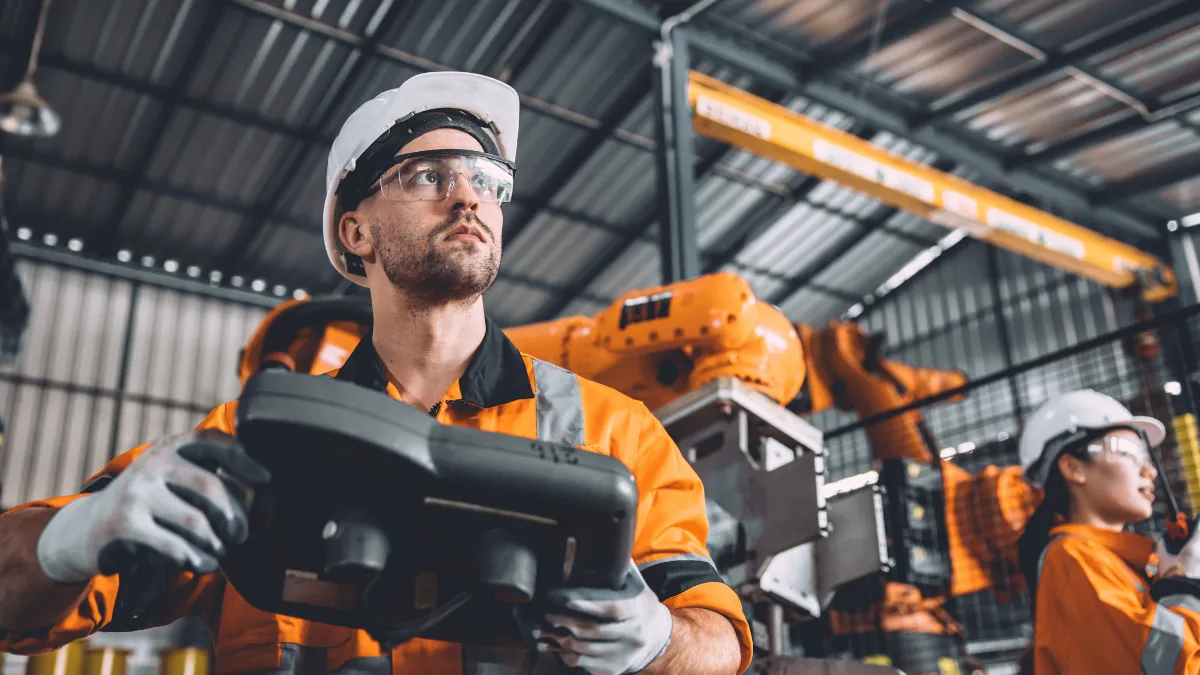
Science minister Patrick Vallance has outlined expectations that warehousing and manufacturing environments will experience the initial wave of transformation as increasingly capable robots enter the workplace. The minister emphasised that combining machine learning capabilities with physical automation represents a significant shift in technological potential.
Vallance explained that the nature of work itself will evolve rather than simply disappear. He pointed to surgical applications where robotic systems enable greater precision without replacing medical professionals, suggesting a model where technology augments human expertise rather than eliminating it entirely.
The minister acknowledged that certain categories of work, particularly tasks characterised by repetition and predictability, are likely candidates for automation. However, he framed this transition as removing less engaging elements of jobs whilst preserving roles requiring judgement and skill.
This perspective contrasts with warnings issued by Sadiq Khan, who leads the Greater London Authority. Speaking during his annual address at Mansion House, Khan cautioned that artificial intelligence poses a genuine threat of widespread job losses unless government intervention ensures displaced workers can transition into new roles created by technological advancement.
The regulatory changes announced centre on the Regulatory Innovation Office, a government body tasked with accelerating the deployment of emerging technologies throughout the British economy. The office is extending its focus to include robotics and defence sectors, with the stated objective of reducing bureaucratic obstacles that slow product development and market entry.
Officials highlighted that companies developing autonomous systems currently navigate separate approval processes covering aviation standards, data protection requirements, and industry-specific safety regulations. This fragmented approach can extend timelines by months and substantially increase costs for businesses attempting to commercialise new technologies.
Accompanying the regulatory initiative, the Department for Science, Innovation and Technology announced £52 million in funding for facilities designed to encourage British companies to adopt robotic systems. These centres will provide practical guidance and live demonstrations to businesses considering automation.
Vallance made his remarks whilst visiting Humanoid, a British robotics manufacturer that has already placed prototype systems within a Siemens industrial facility in Germany. Representatives from the company expressed support for measures that accelerate real-world testing opportunities for emerging robotic platforms.
The government's dual approach combines reducing administrative barriers with financial support for adoption, reflecting a strategy to position Britain as a competitive location for robotics development and deployment whilst managing the workforce implications of automation.
Industry Impact and Market Implications
The regulatory streamlining outlined by British authorities signals a strategic effort to accelerate commercialisation timelines for robotics and autonomous systems, potentially influencing where companies choose to develop and test new technologies. Reducing approval complexity could lower market entry costs, particularly benefiting smaller enterprises that lack resources to navigate fragmented regulatory frameworks.
Manufacturing and logistics sectors appear positioned as testing grounds for workplace automation, which may establish operational precedents and safety standards that shape broader adoption patterns. Success in these controlled environments could build confidence amongst businesses in service industries currently hesitating over automation investments.
The tension between Vallance's skill enhancement narrative and Khan's displacement warnings reflects a fundamental uncertainty facing policymakers globally. Labour market outcomes will likely depend on the pace of technological deployment relative to workforce retraining capacity, with implications for regional economic inequality if automation concentrates in areas with existing skills infrastructure.
Funding for adoption hubs suggests recognition that technical capability alone does not guarantee market penetration. Small and medium enterprises often cite knowledge gaps and unclear return on investment as barriers to automation, indicating that demonstration facilities could address adoption friction beyond purely regulatory concerns.
The inclusion of defence technology within the regulatory initiative may attract international investment given growing global demand for autonomous systems in security applications. However, this also introduces geopolitical considerations around export controls and technology transfer that could complicate the streamlining objectives.
Surgical robotics cited as a positive precedent represents a high-skill, high-stakes environment where human oversight remains essential. Whether this model translates to warehouse operations, where economic incentives favour minimising labour costs, remains an open question with significant implications for employment quality and worker bargaining power.
More AI & Tech News




.webp)


Subscribe to Stay in the loop
Get the latest AI and technology news, honest tool reviews, and practical guides delivered straight to your inbox.
Success! Check your Inbox!

Tezons Newsletter
The latest technology news, in-depth tool reviews, and practical guides - curated and delivered to your inbox.
Latest News



Have any questions?
Didn’t find what you were looking for? We’re just a message away.