CoreWeave Secures Additional $2 Billion From Nvidia to Expand AI Infrastructure Network
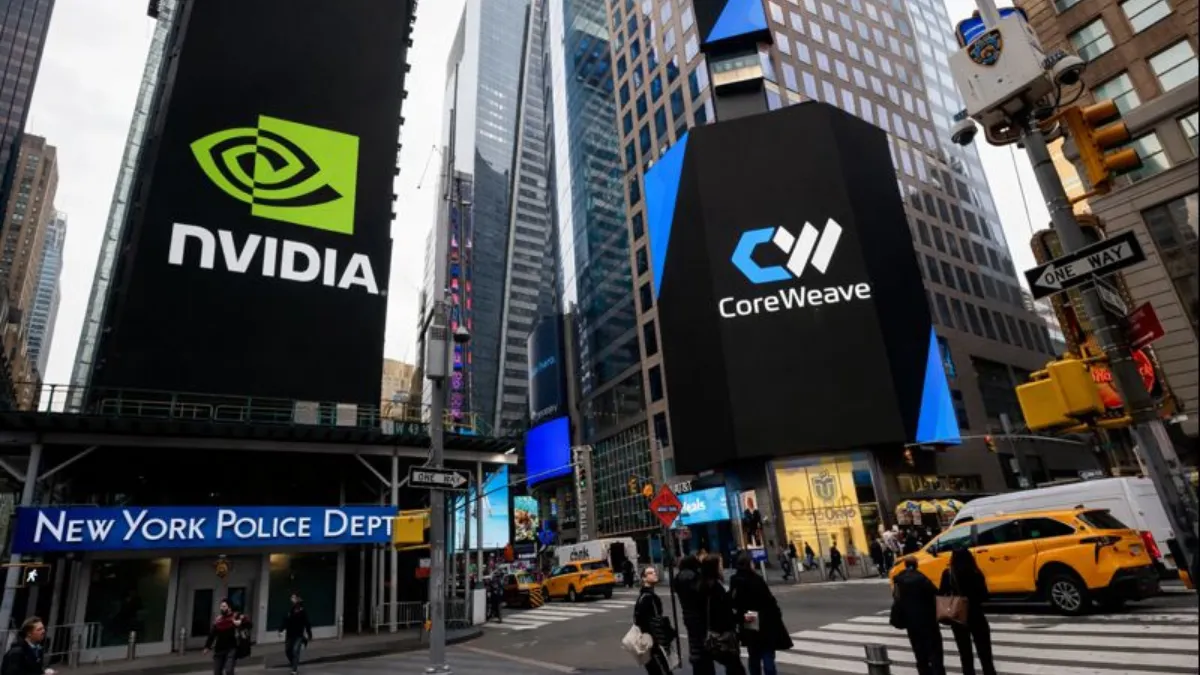

CoreWeave shares climbed 9% in early Monday trading following confirmation that Nvidia has injected a further $2 billion into the AI infrastructure provider through a direct equity purchase.
The investment, structured as a Class A stock acquisition priced at $87.20 per share, arrived as CoreWeave accelerates construction of specialised data centres designed exclusively for machine learning workloads. The company has committed to deploying more than five gigawatts of AI-optimised computing capacity before 2030.
Trading closed at $92.98 on Friday. The pre-market rally pushed shares above $101, whilst Nvidia's own stock edged down 0.5% in early hours.
The transaction extends a strategic relationship that already includes a multi-year commercial agreement. Last September, Nvidia committed to purchasing $6.3 billion worth of unused computing services from CoreWeave through to 2032, securing long-term access to GPU infrastructure as competition for training capacity tightens across the sector.
Beyond capital, the latest agreement deepens technical collaboration between the two entities. CoreWeave will integrate testing of its proprietary scheduling software, Mission Control, with Nvidia's hardware and platform ecosystem. The resource management tool is designed to optimise workload distribution across distributed GPU clusters.
Jensen Huang, Nvidia's founder and chief executive, described CoreWeave's technical execution and platform engineering as recognised industry benchmarks in a company statement issued alongside the funding announcement.
CoreWeave's trajectory reflects broader shifts in digital infrastructure demand. Founded in 2017 as Atlantic Crypto, the firm initially operated Bitcoin mining hardware before repositioning towards cloud computing and artificial intelligence services following the 2018 cryptocurrency market downturn. The pivot proved prescient as enterprise and research institutions began competing for scarce GPU resources to support generative AI development.
The funding arrives amid sustained expansion in AI-focused data centre construction globally, with hyperscalers and specialist providers racing to meet computational requirements from language model developers, research laboratories, and commercial AI applications.
CoreWeave has not disclosed the geographic distribution of planned capacity additions, though industry analysts expect buildouts to concentrate in regions offering reliable power infrastructure and favourable regulatory frameworks for energy-intensive computing operations.
Industry Impact and Market Implications
Nvidia's expanded stake in CoreWeave underscores the chip manufacturer's vertical integration strategy within AI infrastructure markets. By securing both equity positions and long-term capacity commitments, Nvidia reduces exposure to supply chain volatility whilst maintaining preferential access to deployment environments for its hardware.
For CoreWeave, the capital infusion provides runway to compete against established cloud providers and emerging GPU infrastructure specialists. The firm operates in a segment where capital intensity remains high, with data centre construction, power provisioning, and cooling systems requiring substantial upfront investment before revenue generation begins.
The partnership structure may influence how other chip designers and cloud providers negotiate infrastructure relationships. Direct equity investments tied to commercial agreements create alignment that pure customer-vendor arrangements do not, potentially setting precedent for similar deals across the sector.
From a regulatory perspective, the transaction raises questions about vertical integration in AI infrastructure markets. Nvidia's dual role as hardware supplier and infrastructure investor could attract scrutiny from competition authorities monitoring concentration in foundational AI technologies, particularly in jurisdictions implementing digital markets oversight.
The cryptocurrency industry connection, whilst now historical, demonstrates how mining infrastructure expertise translated into competitive advantages when GPU workloads shifted from proof-of-work consensus to neural network training. Former mining operations across North America and Europe have similarly repositioned towards AI services, creating an unexpected pipeline of technical talent and operational knowledge.
Energy capacity remains the primary constraint for AI data centre expansion. CoreWeave's five-gigawatt target would consume power equivalent to a mid-sized city, intensifying focus on grid availability, renewable energy sourcing, and thermal management technologies. Regions offering both stable power and climate advantages for natural cooling may see disproportionate infrastructure investment.
The September 2024 capacity purchase agreement suggests Nvidia anticipates sustained internal demand for compute resources beyond what its own facilities can provide. This may reflect expanding research priorities, customer support requirements, or product testing needs that benefit from external infrastructure partnerships.
More AI & Tech News




.webp)


Subscribe to Stay in the loop
Get the latest AI and technology news, honest tool reviews, and practical guides delivered straight to your inbox.
Success! Check your Inbox!

Tezons Newsletter
The latest technology news, in-depth tool reviews, and practical guides - curated and delivered to your inbox.
Latest News



Have any questions?
Didn’t find what you were looking for? We’re just a message away.