Gold Breaches $5,000 Mark in Unprecedented Market Surge
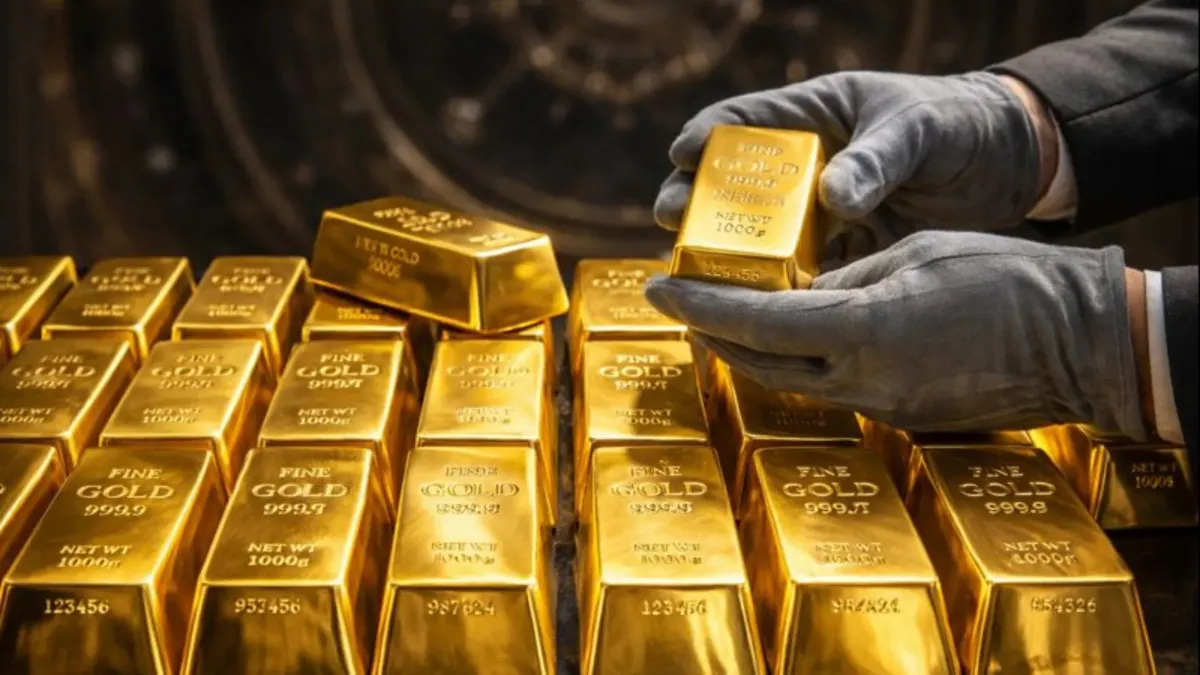

- Gold crossed the $5,000 per ounce threshold for the first time in trading history, representing more than 60 per cent appreciation throughout 2025
- The breakthrough was driven by escalating geopolitical tensions including US-NATO discord over Greenland, Trump tariff strategy, and sustained central bank buying of bullion
- Analysts drew comparisons to gold's behaviour during previous crisis periods including the 1980 oil shock and the 2008 financial collapse, identifying similar confluence of safe-haven demand drivers
Gold has crossed the $5,000 per ounce threshold for the first time in trading history, marking a continuation of an extraordinary run that has seen the metal appreciate more than 60% throughout 2025.
The milestone reflects deepening investor anxiety over geopolitical flashpoints and economic policy direction. Escalating discord between Washington and NATO regarding Greenland has intensified market unease, whilst President Donald Trump's tariff strategy continues to generate volatility. His weekend warning of imposing 100% duties on Canadian goods should Ottawa pursue a commercial agreement with Beijing has further rattled confidence.
Precious metals function as traditional refuge investments during periods of instability. Silver similarly breached the $100 per ounce barrier on Friday, following its near 150% advance over the previous year.
Multiple forces are converging to propel demand. Persistent above-target inflation, dollar weakness, widespread central bank purchasing programmes and anticipated Federal Reserve rate reductions are all contributing factors. Active conflicts in Ukraine and the Middle East, alongside Washington's detention of Venezuelan leader Nicolás Maduro, have compounded upward price pressure.
Gold's fundamental attraction stems from its limited availability. The World Gold Council reports approximately 216,265 tonnes have been extracted throughout human history, sufficient volume to occupy three to four Olympic swimming pools. Most extraction occurred after 1950 as technological capabilities improved and new deposits emerged.
The US Geological Survey projects roughly 64,000 tonnes remain accessible in underground reserves, though production is forecast to reach a ceiling within coming years.
"When you own gold, it's not attached to the debt of somebody else like a bond is or an equity where the performance of a company will drive performance," explained Nicholas Frappell, who leads institutional markets at ABC Refinery. "It's a really good diversifier in a very uncertain world."
The metal registered its strongest annual performance since 1979 in 2025 as portfolio managers sought alternatives. Persistent concerns surrounding tariff implementation and artificial intelligence stock valuations have driven successive record peaks.
"I think a large part of that is the extreme uncertainty we have around US policy," observed Nikos Kavalis from Metals Focus, a research consultancy.
Gold typically appreciates when rate cuts appear imminent, as lower yields diminish fixed-income appeal and redirect capital towards alternative stores of value. Markets broadly anticipate two Federal Reserve rate reductions during the current year.
"It's inversely correlated because the opportunity cost of keeping the money in a [government bond] is really not worth it anymore, so people go to gold," noted Ahmad Assiri, research strategist at Pepperstone.
Institutional buyers have also been active participants. Central banks added hundreds of tonnes to official reserves in 2025, according to World Gold Council data. Monetary authorities in China, Poland and Azerbaijan ranked amongst the largest acquirers.
"There's a very clear shift away from the US dollar, which is benefiting gold immensely," Kavalis said.
Despite the sustained rally, Frappell cautioned that the "news-driven" character of current trading could reverse rapidly. "There's got to be scope for unexpected news that actually might be positive for the world and not necessarily positive for gold," he remarked.
Investment motives represent only partial demand. Cultural traditions drive substantial purchasing across multiple regions. In India, the Diwali festival is considered an auspicious moment for acquiring precious metals to attract prosperity. Morgan Stanley estimates Indian households possess $3.8 trillion in gold holdings, equivalent to 88.8% of national GDP.
China constitutes the largest single consumer market globally, where the metal is associated with fortune. "We often see a seasonal uptick in demand around Chinese New Year, which we are seeing at the moment to an extent," Kavalis noted, referencing February's Year of the Horse celebrations.
Industry impact and market implications
This pricing milestone carries significant ramifications across multiple sectors. Mining companies with gold production capacity stand to benefit from enhanced revenue per ounce, potentially justifying exploration investments in previously marginal deposits as the economic threshold for extraction lowers. However, producers may face pressure to accelerate output before anticipated supply plateaus materialise.
Financial institutions offering commodity exposure through exchange-traded products are experiencing heightened inflows, strengthening their position within wealth management portfolios. Traditional fixed-income providers face competitive challenges as gold's appeal erodes bond allocations, particularly in anticipation of rate cuts that compress yields.
The sustained central bank accumulation pattern suggests a structural shift in reserve composition, potentially reducing dollar dominance in international finance over the medium term. This rebalancing could influence currency markets and sovereign debt dynamics as institutions diversify away from traditional reserve currencies.
Jewellery manufacturers and retailers in key consumption markets including India and China may encounter margin compression if consumers prove price-sensitive, though cultural purchasing patterns have historically demonstrated resilience during previous rallies. Technology manufacturers utilising gold in electronics production will need to evaluate input cost strategies.
The correlation between policy uncertainty and gold performance reinforces the metal's positioning as a portfolio hedge, likely sustaining institutional demand whilst geopolitical and trade tensions remain elevated. Should unexpected diplomatic breakthroughs or economic stability emerge, however, the sharp appreciation could reverse quickly, exposing late-cycle buyers to volatility.
LATEST NEWS
Satellites and AI used to track UK hedgehogs in bid to slow decline
Elon Musk keeps losing in court. He shows no sign of stopping
Paramount hires first consumer AI chief as Ellison bets on tech
MORE FROM NEWS

.webp)


RELATED






Subscribe for updates
Get the insights, tools, and strategies modern businesses actually use to grow. From breaking news to curated tools and practical marketing tactics, everything you need to move faster and smarter without the guesswork.
Success! Check your Inbox!

Tezons Newsletter
Get curated tools, key business news, and practical insights to help you grow smarter and move faster with confidence.
Latest News




Have a question?
Still have questions?
Didn’t find what you were looking for? We’re just a message away.