Former Binance Chief in Government Talks on State Asset Tokenisation
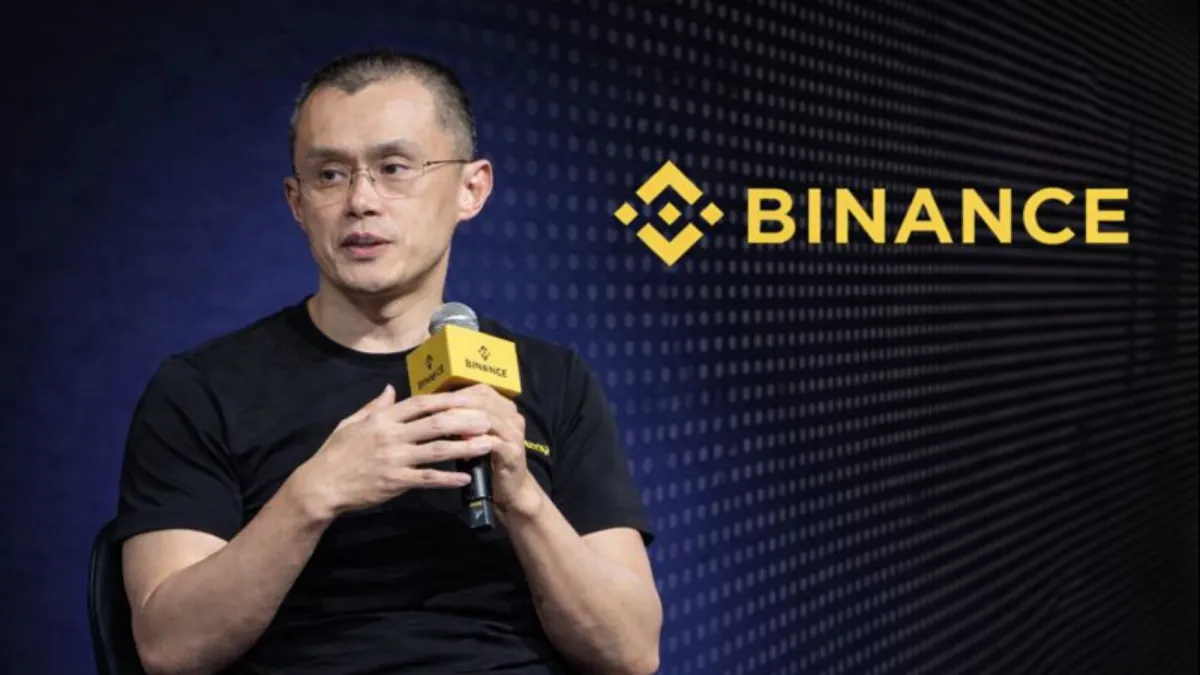

- Changpeng Zhao disclosed at Davos that he is in discussions with approximately a dozen national governments about tokenising state-owned assets including public infrastructure, property, and natural resources
- The proposed framework would enable states to monetise ownership stakes in public assets through blockchain-based tokens, allowing fractional ownership and new forms of state financing
- Zhao argued that tokenisation could allow governments to raise capital from their asset bases without full privatisation, maintaining public ownership while enabling partial financing through digital token markets
Changpeng Zhao, who stepped down as Binance's chief executive in 2023, has disclosed ongoing discussions with approximately a dozen national governments regarding the tokenisation of state-owned assets.
Speaking during a panel session at this year's World Economic Forum in Davos, Zhao outlined a framework through which governments could convert ownership stakes in public infrastructure, property holdings, or natural resources into blockchain-based tokens. The approach would enable states to monetise assets without full divestment, raising capital that could be redirected towards industrial development or public services.
Zhao did not identify which jurisdictions are involved in the talks, nor did he specify which asset classes are under consideration. However, the model he described bears resemblance to partial privatisations seen in sectors such as telecommunications and energy, where governments have historically sold minority stakes to private investors whilst retaining operational control.
Under a tokenisation structure, physical or intangible assets are represented as digital tokens on a distributed ledger. These tokens can be divided into smaller units, allowing for fractional ownership and secondary market trading. Proponents argue the system could improve liquidity for traditionally illiquid assets and broaden access to investment opportunities previously restricted to institutional buyers.
"This way the government can actually realise their financial gains first, and use that to develop these industries," Zhao said during the session.
Zhao has previously mentioned engagement with several governments on blockchain infrastructure projects. Among them are Pakistan and Malaysia, both of which have explored digital currency frameworks in recent years. Kyrgyzstan launched a stablecoin linked to its national currency, the som, in 2024, alongside plans for a dollar-denominated stablecoin supported by $300 million in gold reserves held by the state.
The former Binance executive also addressed the evolving payments landscape, noting that traditional payment rails and cryptocurrency networks are beginning to overlap. He suggested that digital currencies will become the default settlement layer for autonomous artificial intelligence agents conducting transactions on behalf of users, predicting that machine-to-machine commerce will predominantly occur in crypto rather than fiat currency.
Zhao's remarks come as governments worldwide assess the viability of tokenised assets as a fiscal tool. Whilst some jurisdictions have moved quickly to establish regulatory sandboxes and pilot programmes, others remain cautious amid concerns over transparency, custody, and investor protection in decentralised markets.
Industry Impact and Market Implications
Zhao's comments reflect a broader institutional interest in asset tokenisation, particularly among governments seeking alternative revenue mechanisms without relinquishing control of strategic holdings. Should such programmes gain traction, they could accelerate regulatory clarity around blockchain-based securities and create new compliance frameworks for custodians, exchanges, and asset managers operating in the digital asset space.
For the crypto industry, government adoption of tokenisation platforms could drive demand for enterprise-grade blockchain infrastructure, particularly in jurisdictions where public-private partnerships are being explored. It may also influence the development of interoperable standards for digital asset custody and settlement, as states require greater assurance around security and auditability than retail-focused platforms typically provide.
However, implementation challenges remain significant. Questions around legal enforceability of tokenised ownership, cross-border transferability, and the taxation of fractional assets have yet to be resolved in most legal systems. Additionally, tokenising state-owned assets introduces geopolitical risk, particularly if foreign investors acquire stakes in infrastructure deemed strategically sensitive.
The integration of AI agents into crypto payments, as Zhao suggested, could reshape transaction flows in decentralised finance and enterprise automation. If autonomous systems begin transacting independently using digital currencies, it may prompt regulators to revisit definitions of legal personhood, liability, and compliance obligations for machine-generated financial activity.
LATEST NEWS
Satellites and AI used to track UK hedgehogs in bid to slow decline
Elon Musk keeps losing in court. He shows no sign of stopping
Paramount hires first consumer AI chief as Ellison bets on tech
MORE FROM NEWS

.webp)


RELATED





Subscribe for updates
Get the insights, tools, and strategies modern businesses actually use to grow. From breaking news to curated tools and practical marketing tactics, everything you need to move faster and smarter without the guesswork.
Success! Check your Inbox!

Tezons Newsletter
Get curated tools, key business news, and practical insights to help you grow smarter and move faster with confidence.
Latest News




Have a question?
Still have questions?
Didn’t find what you were looking for? We’re just a message away.