Artificial General Intelligence Investment Boom Sparks Questions Over Financial Stability
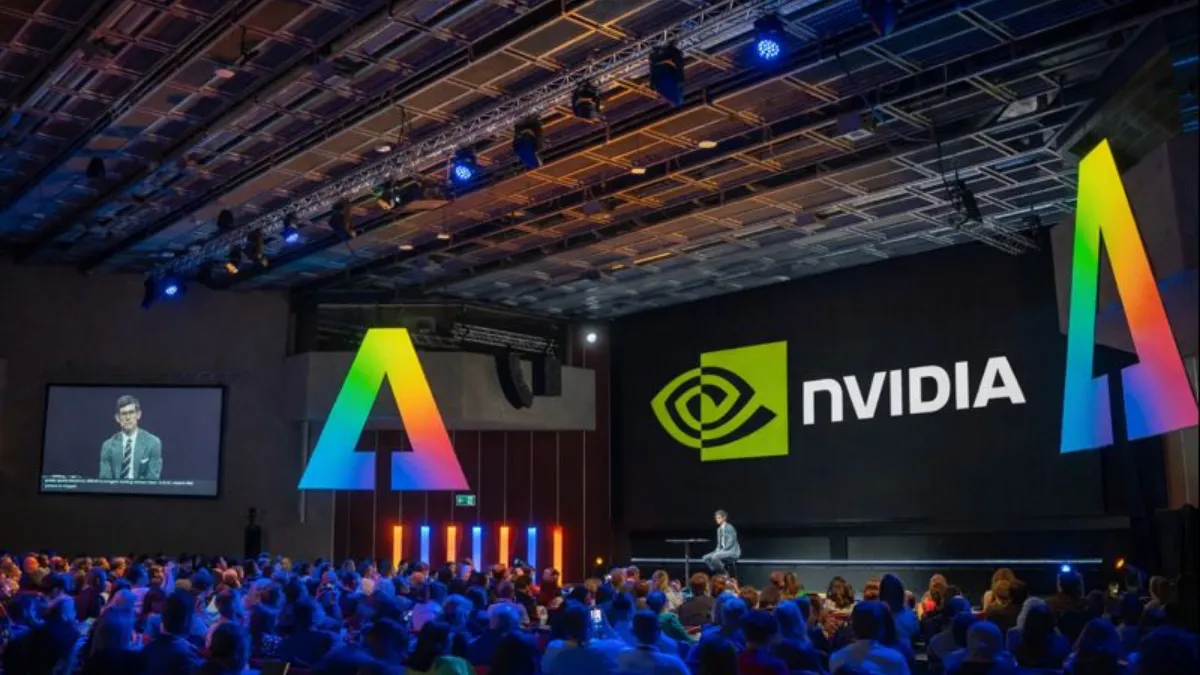

The global technology industry faces a critical juncture as trillions of dollars flow into artificial intelligence infrastructure, raising concerns about financial stability should the anticipated breakthrough to artificial general intelligence fail to materialise.
Investment in AI-related infrastructure has reached extraordinary levels. Spending on data centres, which form the computational backbone of modern AI systems, is projected to reach $2.9 trillion between now and 2028. Nvidia, the dominant supplier of AI processing chips, commands a market valuation exceeding $4 trillion. Competition for specialist talent has intensified to the extent that leading technology firms are offering signing bonuses approaching $100 million for experienced engineers.
This unprecedented capital deployment hinges on the expectation that AI systems will eventually achieve artificial general intelligence, a theoretical milestone where machines would demonstrate human-level competence across diverse cognitive tasks. Such systems could potentially perform complex white-collar work in fields including legal services, accountancy and professional analysis without associated employment costs, representing substantial commercial value for developers and enterprise customers.
Yoshua Bengio, a foundational figure in contemporary AI research, has cautioned that progress towards this goal may encounter unforeseen obstacles. He suggests that technical difficulties could emerge which resist rapid resolution, potentially triggering significant financial consequences for investors anticipating steady advancement.
"There is a clear possibility that we will hit a wall, that there's some difficulty that we don't foresee right now," Bengio stated, noting that many investors deploying capital expect continuous progress at current rates. He emphasised, however, that such a scenario remains less probable than continued advancement.
The financial implications extend across multiple markets. US equity indices have been substantially supported by technology sector performance, whilst debt markets financing data centre construction have expanded rapidly. Gross domestic product growth in the United States has benefited from AI infrastructure investment, with potential international ramifications should momentum falter.
David Cahn, a partner at Sequoia Capital, has observed that technology companies must now deliver on AGI to justify the scale of proposed investment over the coming decade.
Sceptics question whether current approaches possess the inherent capacity to reach artificial general intelligence. David Bader, director of the Institute for Data Science at the New Jersey Institute of Technology, suggests that substantial capital is being directed towards expanding existing transformer-based architectures, the technology underlying contemporary chatbots, through increased computational power and datac entre capacity.
"If AGI requires a fundamentally different approach, perhaps something we haven't yet conceived, then we're optimising an architecture that can't get us there no matter how large we make it," Bader explained.
Major American technology corporations including Alphabet, Amazon and Microsoft continue substantial data centre expansion programmes. These companies benefit from strong cashflows generated by established profitable operations, providing some insulation against potential setbacks in AGI development.
The financing structure supporting this expansion introduces additional complexity. Morgan Stanley analysts estimate that roughly half of the projected $2.9 trillion data centre expenditure will be funded through hyperscaler cashflows, with the remainder requiring alternative financing sources.
Private credit markets, a shadow banking segment attracting regulatory attention from the Bank of England and comparable institutions, are playing an increasing role. Meta has secured $29 billion in private credit financing for a Louisiana data centre facility.
AI-related sectors now represent approximately 15 per cent of investment grade debt in the United States, surpassing the banking sector according to JP Morgan analysis. Oracle, which has concluded a $300 billion data centre agreement with OpenAI, has experienced increases in credit default swap pricing, an indicator of perceived default risk. Higher-risk debt instruments have also appeared through data centre operators including CoreWeave and TeraWulf, whilst asset-backed securities supported by technology company rental payments to data centre owners have increased substantially.
JP Morgan notes that the AI infrastructure expansion requires participation from all segments of credit markets.
Bader warns that failure to achieve AGI within anticipated timeframes could produce contagion across investment-grade bonds, high-yield debt, private credit and securitised products simultaneously.
Equity market concentration represents another dimension of concern. The seven largest American technology companies account for more than one-third of the S&P 500 index valuation, compared with 20 per cent at the decade's beginning.
In October, the Bank of England highlighted risks of sharp market corrections due to elevated valuations of AI-linked technology companies. Central banking authorities express concern that equity markets could decline substantially if AI fails to deliver transformative outcomes matching investor expectations. The International Monetary Fund has noted that valuations are approaching levels observed during the dotcom bubble.
Technology executives have acknowledged speculative elements within the current environment. Sundar Pichai, chief executive of Alphabet, identified "elements of irrationality" in November, noting that no company would be immune to bubble dynamics. Amazon founder Jeff Bezos characterised the AI sector as experiencing "a kind of industrial bubble", whilst OpenAI chief executive Sam Altman observed that "many parts of AI" appear "kind of bubbly".
All three executives maintain optimistic views on AI's long-term trajectory and societal benefits.
The scale of investment creates substantial exposure across financial markets. Pension funds and retail investors would face consequences from share price collapses, whilst debt markets would experience parallel stress. Complex interconnected transactions, such as OpenAI purchasing Nvidia chips whilst Nvidia invests in OpenAI equity, could unravel if AI adoption disappoints or technical barriers emerge.
Technology analyst Benedict Evans argues that generative AI will transform industries and justify expenditure levels. He notes that the investment figures, whilst substantial, remain comparable to other capital-intensive sectors such as oil and gas extraction, which operates at approximately $600 billion annually.
"These AI capex figures are a lot of money but it's not an impossible amount of money," Evans stated, adding that belief in generative AI's significance does not require conviction in AGI's arrival. He suggests that transformation of advertising, search, software and social networks represents sufficient opportunity to support current investment levels.
The industry confronts a paradox. Numerous experts consider the achievement of artificial general intelligence to carry significant risks. Yet failure to reach this milestone could also produce considerable financial and economic consequences.
Industry Impact and Market Implications
The concentration of capital in AI development reflects a broader shift in technology investment patterns that carries implications beyond individual companies or sectors. The deployment of trillions of dollars creates dependencies across financial markets, with exposure distributed through equity holdings, corporate debt instruments and alternative financing vehicles.
From a market structure perspective, the dominance of seven technology companies within major equity indices introduces systemic concentration risk. Should valuations contract, the effects would propagate through pension portfolios, retirement accounts and institutional holdings globally. This dynamic differs from previous technology cycles in scale and the breadth of retail investor participation through index funds and passive investment vehicles.
The financing mechanisms supporting data centre expansion warrant particular attention. The involvement of private credit markets, which operate with less transparency and regulatory oversight than traditional banking, creates potential vulnerabilities. Asset-backed securities supported by technology sector rental streams represent a form of structured finance that experienced significant stress during the 2008 financial crisis, albeit in different underlying assets. Regulatory authorities are monitoring these developments, though intervention mechanisms remain uncertain.
For technology companies, the current environment presents both opportunity and obligation. Firms with established revenue streams possess flexibility to pursue long-term research, whilst newer entrants face pressure to demonstrate commercial viability rapidly. The competitive dynamics may accelerate consolidation as smaller participants struggle to match the capital deployment of major corporations.
The enterprise software and services sector faces transformation regardless of whether artificial general intelligence emerges. Generative AI tools are already being integrated into productivity software, customer service platforms and content generation workflows. This adoption creates tangible revenue opportunities distinct from AGI speculation, though at potentially lower margins than revolutionary scenarios envision.
From a macroeconomic standpoint, the infrastructure investment contributes to gross domestic product and employment in construction, engineering and related fields. However, this activity is predicated on continued technology sector demand. A retrenchment would affect regional economies hosting datacentre facilities, equipment manufacturers and associated supply chains.
International competitiveness considerations also feature prominently. Nations view AI capabilities as strategic assets, with implications for economic productivity and geopolitical influence. The concentration of investment in American companies reflects both their technical leadership and access to capital markets. Other jurisdictions are developing support mechanisms for domestic AI sectors, though matching US private sector investment levels presents challenges.
The situation ultimately reflects uncertainty inherent in frontier technology development. Historical precedents including previous computing revolutions, telecommunications infrastructure buildouts and internet commercialisation demonstrate that transformative technologies justify substantial investment, though timelines and specific applications often diverge from initial expectations. The current AI cycle operates at unprecedented financial scale, amplifying both potential returns and consequences of miscalculation.
More AI & Tech News




.webp)


Subscribe to Stay in the loop
Get the latest AI and technology news, honest tool reviews, and practical guides delivered straight to your inbox.
Success! Check your Inbox!

Tezons Newsletter
The latest technology news, in-depth tool reviews, and practical guides - curated and delivered to your inbox.
Latest News



Have any questions?
Didn’t find what you were looking for? We’re just a message away.