Gold Surges Past $5,000 Following US Strike on Iranian Drone
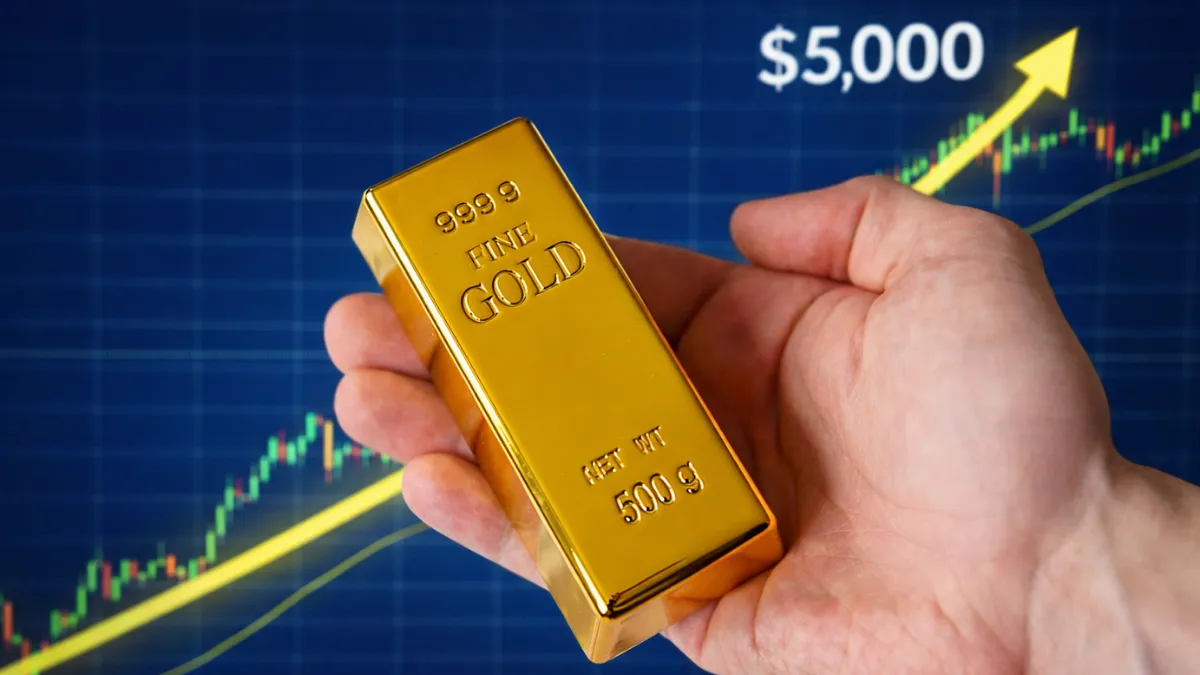

- Gold climbed back above $5,000 per ounce to reach $5,061 after US forces intercepted an Iranian drone in the Arabian Sea, reigniting safe-haven demand
- The recovery followed gold's steepest single-day decline in more than four decades earlier in the week, triggered by developments in US monetary policy that prompted a broad sell-off
- Silver also recovered sharply alongside gold, with both metals responding to geopolitical instability while broader financial markets remained volatile
Gold prices climbed back above $5,000 per ounce on Wednesday after American forces intercepted an Iranian drone over the Arabian Sea, reigniting demand for the precious metal amid heightened geopolitical uncertainty.
The asset, traditionally viewed by investors as a store of value during periods of instability, reached $5,061 per ounce in Wednesday trading. The recovery follows a turbulent week that saw gold experience its steepest single-day decline in more than four decades.
According to US military officials, an Iranian unmanned aerial vehicle was shot down on Tuesday after approaching an American aircraft carrier in what was described as an aggressive manner. Iranian authorities have yet to issue a statement regarding the incident.
The latest price movement extends a period of exceptional volatility for gold, which now trades roughly 80 per cent higher than it did twelve months ago. Driving forces behind the sustained rally include shifting American trade policies, persistent geopolitical conflicts, and increased bullion purchases by central banks worldwide.
Gold reached an all-time high of $5,500 in January before experiencing a sharp reversal last Friday. The 9 per cent drop that day marked the largest single-day fall for the commodity since 1983, triggered by President Donald Trump's announcement that Kevin Warsh would be nominated as the next chair of the Federal Reserve.
Market participants interpreted the Warsh nomination as a stabilising development, easing concerns about central bank independence following public criticism by Trump of current Federal Reserve chair Jerome Powell and the institution's approach to interest rate adjustments.
Emma Wall, chief investment strategist at Hargreaves Lansdown, suggested that opportunistic buying is driving the current rebound. "The slump proved too enticing to ignore and the fundamental drivers of the metal are intact," Wall stated, whilst cautioning that further volatility is probable.
Upcoming events including monetary policy decisions in the United States, November's midterm elections, and ongoing conflicts in Ukraine and the Middle East are expected to sustain uncertain market conditions.
Silver has also regained ground following recent losses, climbing approximately 5 per cent to $92 per ounce on Wednesday. The metal experienced an even more severe correction than gold last Friday, dropping 27 per cent in a single session after surging earlier in the year.
Despite trading well below its January peak above $120, silver remains nearly triple its value from a year ago, reflecting similar macroeconomic pressures affecting precious metals broadly.
Industry Impact and Market Implications
This development reinforces gold's role as a primary hedge during geopolitical crises, particularly for institutional investors and wealth managers seeking portfolio diversification. The continued volatility presents both opportunities and risks for commodities traders, mining companies, and exchange-traded fund providers focused on precious metals.
Gold mining operators may benefit from sustained elevated prices, potentially improving project economics and expansion plans, though input cost inflation and regulatory challenges remain constraints. Companies such as Newmont Corporation, Barrick Gold, and others with significant production capacity could see improved margins if prices stabilise at current levels.
The sharp price swings also highlight vulnerabilities for industries with significant gold exposure, including jewellery manufacturers and electronics producers, where procurement costs can materially affect profitability. Buyers in these sectors may accelerate hedging strategies or adjust inventory management practices to mitigate price risk.
Central bank activity remains a structural support factor, with monetary authorities in emerging markets continuing to diversify reserves away from dollar-denominated assets. This trend, combined with ongoing uncertainty surrounding US trade policy and Federal Reserve leadership, suggests that demand fundamentals remain supportive even as speculative positioning drives short-term volatility.
For the broader investment community, the gold market's behaviour underscores the importance of geopolitical risk assessment in portfolio construction, particularly as traditional correlations between assets become less predictable during periods of policy uncertainty and international tension.
LATEST NEWS
Satellites and AI used to track UK hedgehogs in bid to slow decline
Elon Musk keeps losing in court. He shows no sign of stopping
Paramount hires first consumer AI chief as Ellison bets on tech
MORE FROM NEWS

.webp)


RELATED






Subscribe for updates
Get the insights, tools, and strategies modern businesses actually use to grow. From breaking news to curated tools and practical marketing tactics, everything you need to move faster and smarter without the guesswork.
Success! Check your Inbox!

Tezons Newsletter
Get curated tools, key business news, and practical insights to help you grow smarter and move faster with confidence.
Latest News




Have a question?
Still have questions?
Didn’t find what you were looking for? We’re just a message away.