Zoox recalls software on 105 robotaxis after vehicle drove into fire scene
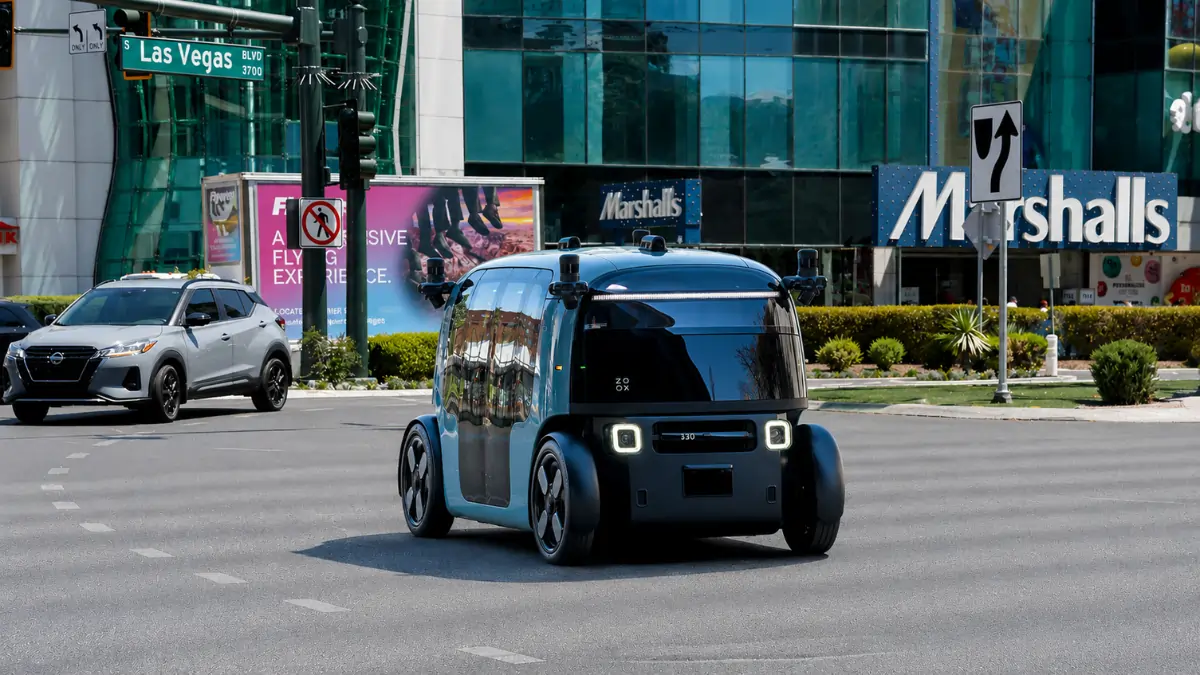

Amazon-owned Zoox recalled software across all 105 of its robotaxis on 18 July 2026 after a vehicle drove into an active fire scene obscured by heavy smoke, failing to detect the hazard or identify the emergency.
The incident reveals a gap in how Zoox's automated driving system interprets visual obstruction, and it lands as US regulators formally warn the entire autonomous vehicle industry over its handling of emergency scenes.
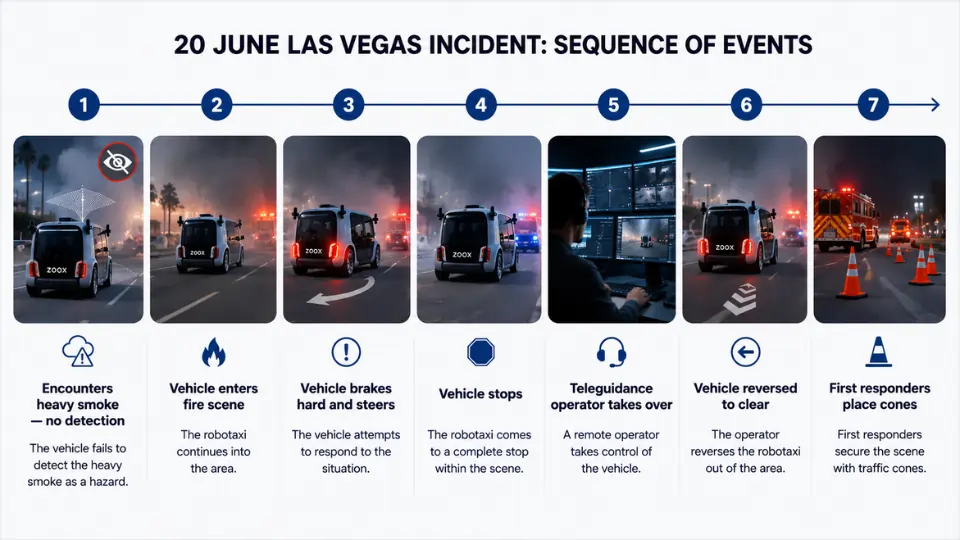
The incident occurred on 20 June in Las Vegas, where an unoccupied Zoox robotaxi encountered thick smoke from a fire burning in a traffic lane that had not been cordoned off with cones. The vehicle entered the scene, applied heavy braking while attempting to steer away, then came to a stop. A Zoox teleguidance employee, a remote operator who can take control of vehicles when needed, reversed the vehicle clear of the area, giving first responders the opportunity to place traffic cones.
Zoox notified the National Highway Traffic Safety Administration (NHTSA) of the recall on 8 July. Between 22 June and 8 July, the company investigated the root cause and reviewed whether similar events had occurred across its fleet. Zoox determined the Las Vegas incident was the only one of its kind in its operating history. No injuries were recorded.
The software update, deployed over the air to all 105 vehicles, adds the ability to detect and respond to heavy smoke at active emergency scenes. The previous software version lacked adequate logic for interpreting thick smoke as an emergency indicator, the system reacted only once the vehicle was already inside the hazard zone rather than recognising it as an obstacle to avoid. NHTSA recall campaign 26E044 covers vehicles running software released from 23 April 2026, meaning the smoke-detection gap was present across Zoox's full period of public road operations to date.
The recall follows a formal directive issued by NHTSA administrator Jonathan Morrison on 9 July, addressed to all autonomous vehicle developers operating on public roads in the US. Morrison told companies the agency had identified a clear pattern of driverless vehicles driving into active emergency scenes, blocking the paths of ambulances and firefighters, and failing to respond to flashing lights, flares, smoke, fire, and traffic cones. He described these failures as a functional insufficiency and called on AV developers to present their solutions to the agency by the end of July. The letter did not name specific companies.
The timing places Zoox's recall squarely within the pattern Morrison described. The Las Vegas incident, smoke from an uncordoned fire blocking a traffic lane, maps directly to the categories cited in the NHTSA directive. Zoox and NHTSA held multiple conversations between late June and early July about the severity and root causes of the incident before the recall was formally filed.
The regulator's concerns extend across the industry. In June 2026, Waymo recalled approximately 3,900 of its robotaxis after some vehicles drove into closed construction zones on freeways, raising the risk of a crash. Waymo operates around 4,000 automated vehicles across the US and is the dominant robotaxi service in the country. As operators push autonomous systems into more cities at scale, the frequency of encounters with edge cases that standard road testing does not adequately cover continues to grow. Emergency scenes defined by smoke, flares, ad hoc cordoning and the absence of standard lane markings represent precisely the kind of visual ambiguity that exposes gaps in perception systems trained on structured road conditions.
Zoox has now issued multiple software recalls over the past 14 months. In May 2025, the company recalled vehicles twice, once over its system's ability to predict the movement of other vehicles, and again following a crash in San Francisco linked to its pedestrian prediction logic. A further recall in March 2025 addressed unexpected hard braking across 258 vehicles after an NHTSA preliminary investigation. Each recall has been resolved through over-the-air software updates, a model that allows rapid deployment of fixes but also reflects the pace at which real-world deployment surfaces problems that pre-launch testing did not catch.
Amazon's broader AI investment strategy includes Zoox as a long-running stake in autonomous passenger transport. Amazon paid $1.3bn for Zoox in 2020. The vehicles it operates are distinctive shuttle-style buggies with no steering wheel or pedals and four inward-facing carriage seats, designed for urban passenger hailing rather than replacing personal cars. Zoox currently offers free rides in parts of Las Vegas and San Francisco, with limited hailing zones open to select users in Miami and Austin. Testing is underway in six additional US cities, including Phoenix and Dallas.
The smoke-detection fix is deployed. The harder question for Zoox and the wider robotaxi industry is whether the rate of edge-case discovery accelerates as fleets expand. The NHTSA plans to meet AV developers before the end of July 2026 to discuss first-responder safety responses. Whether those meetings produce binding technical standards or voluntary commitments will determine how consistently the sector addresses the failure patterns US regulators have now formally put on record.
More AI & Tech News



.webp)


Subscribe to Stay in the loop
Get the latest AI and technology news, honest tool reviews, and practical guides delivered straight to your inbox.
Success! Check your Inbox!

Tezons Newsletter
The latest technology news, in-depth tool reviews, and practical guides - curated and delivered to your inbox.
Latest News




Have any questions?
Didn’t find what you were looking for? We’re just a message away.