China lands a reusable rocket for the first time
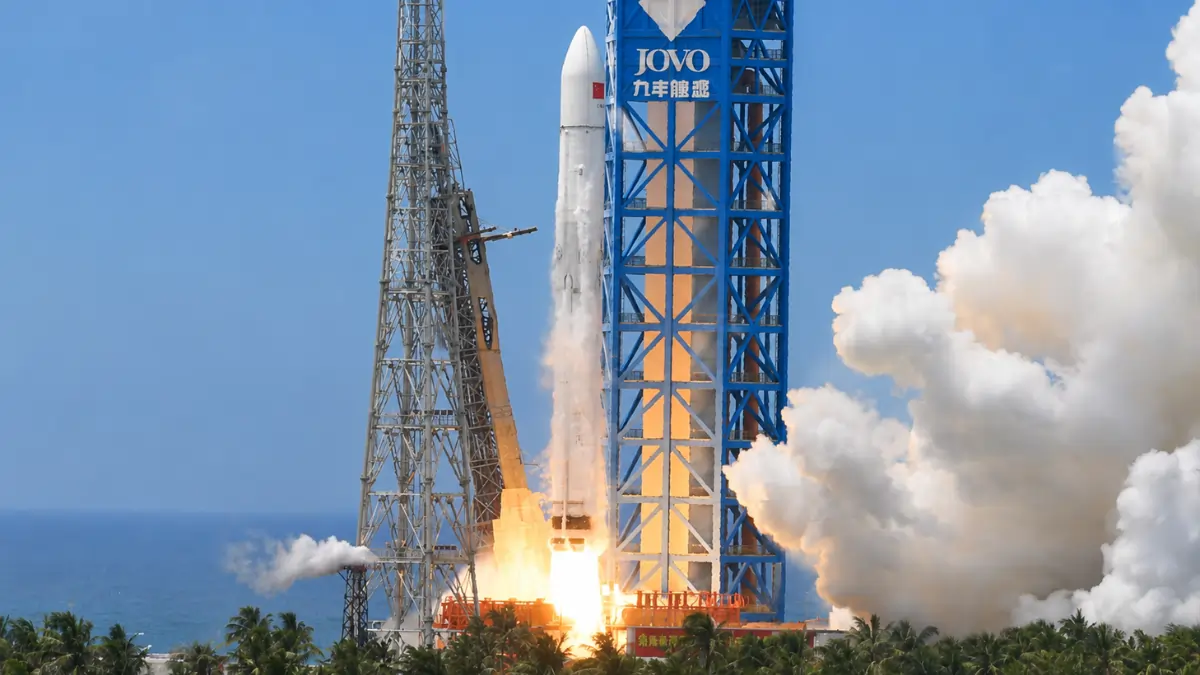

China landed a reusable rocket booster for the first time on 13 July 2026, with the Long March 10B completing a controlled vertical descent onto a floating platform six minutes after stage separation.
The China Aerospace Science and Technology Corporation carried out the launch from Hainan in southern China. The milestone puts China in a small group of countries with demonstrated reusable launch capability, alongside the United States.
The Long March 10B can carry at least 16 metric tons to low-Earth orbit, a payload capacity comparable to SpaceX's Falcon 9. The technical approach differs, though. Rather than landing autonomously on a ground pad or drone ship, the Long March 10B booster uses landing hooks to grab a net fixed to a floating recovery platform. That distinction matters for operational tempo: the Falcon 9 completes pad landings in under 10 minutes from separation and can be turned around for another flight within days.
China's path to this point involved a near-miss in February 2026. A Long March 10A rocket completed a controlled descent on that attempt but splashed down next to the recovery platform rather than on it. The 10B design addressed that shortfall, though the net-catch mechanism introduces its own constraints on reuse rate and refurbishment compared to the propulsive landing approach SpaceX has refined since 2015.
SpaceX landed its first reusable Falcon 9 booster in December 2015, following an orbital flight. Blue Origin's New Glenn achieved a comparable milestone in November 2025. The Falcon 9 now launches roughly 150 times per year, with individual boosters capable of flying dozens of times each. That frequency is the real commercial benchmark: the landing itself is a proof of concept; the cadence and reuse count determine whether it changes launch economics.
China's satellite sector responded sharply. China Spacesat and China Satellite Communications each rose 10% on the session, the maximum daily move permitted under the country's financial market rules. The reaction reflects an expectation that domestic launch costs will fall as reusable capability matures, reducing the per-launch cost of satellite deployment.
SpaceX's valuation has been driven in large part by its launch cost advantage, which stems directly from Falcon 9 reusability. A Chinese competitor closing that gap would affect commercial satellite launch pricing globally, including contracts currently held by SpaceX and United Launch Alliance.
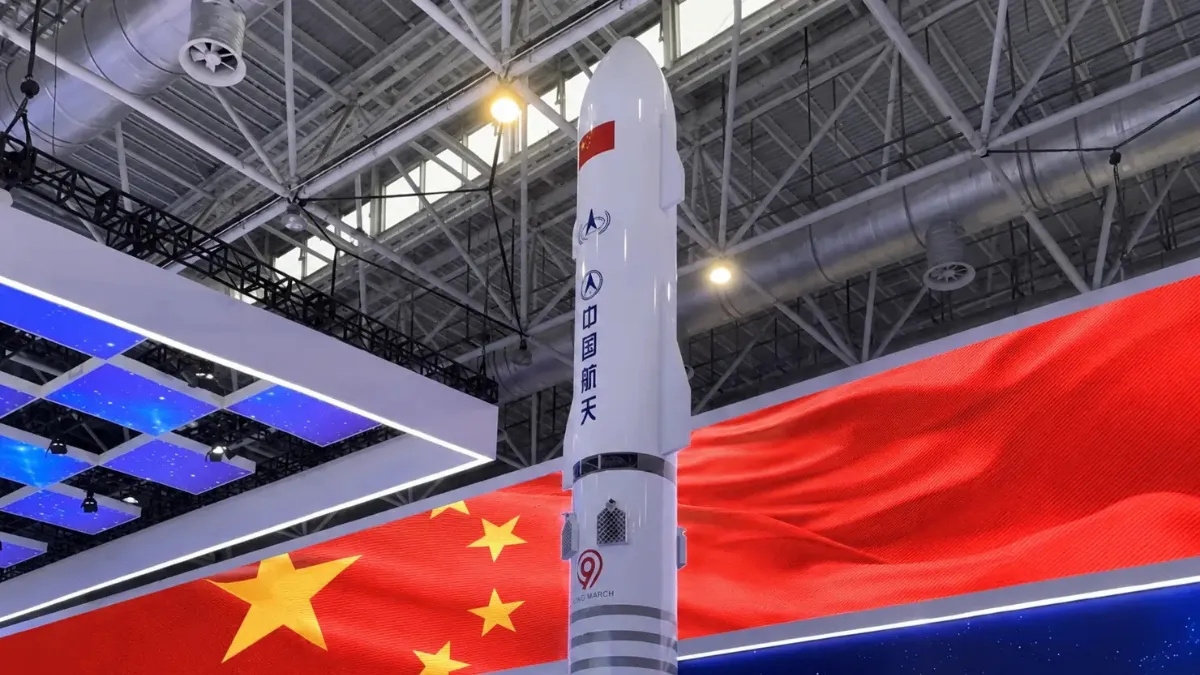
The Long March 10B's net-catch landing is not a permanent limitation. It is an early-stage engineering choice that trades autonomous precision for mechanical reliability during initial testing. SpaceX itself experimented with net catches for its early booster attempts before committing to propulsive landings. The question for China's programme is how quickly it can move from a demonstrated recovery to a repeatable, low-cost turnaround.
SpaceX has reoriented its programme toward lunar infrastructure, which requires heavy-lift vehicles rather than medium-class rockets like the Falcon 9. The Long March 10B sits in the medium class and positions China to compete directly for commercial geostationary and low-Earth orbit satellite contracts rather than crewed deep-space missions in the near term.
The China Aerospace Science and Technology Corporation has not confirmed a target reuse cadence or turnaround timeline for the Long March 10B. Those figures will determine whether the programme translates a successful test into a commercial launch product.
More AI & Tech News




.webp)


Subscribe to Stay in the loop
Get the latest AI and technology news, honest tool reviews, and practical guides delivered straight to your inbox.
Success! Check your Inbox!

Tezons Newsletter
The latest technology news, in-depth tool reviews, and practical guides - curated and delivered to your inbox.
Latest News




Have any questions?
Didn’t find what you were looking for? We’re just a message away.