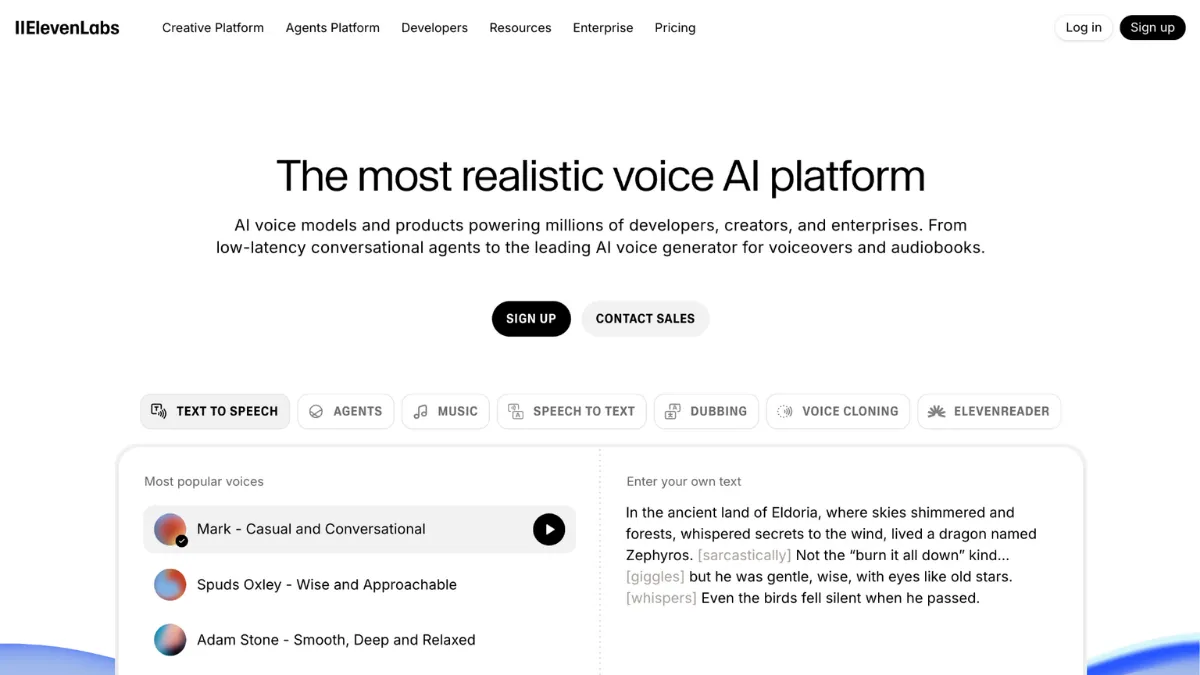
Voice quality is the differentiator that actually matters in AI audio, and ElevenLabs sits at the top of that measure by a clear margin. The platform produces speech with emotional range, natural pacing, and convincing multilingual output that competing tools have not matched at equivalent price points. That quality advantage compounds across use cases: a podcast voiceover, an audiobook narration, and a real-time voice agent all benefit from the same underlying model. What you are buying here is not a feature list but a foundation. The question is whether the platform structure around that foundation serves your workflow, because ElevenLabs has grown from a focused text-to-speech tool into a broad audio platform, and that growth has introduced pricing complexity that catches many users off guard.
The core mechanism is a credit system where one credit maps to one character of text for standard text-to-speech generation, though different models and features consume credits at different rates. Turbo models cost half the credits of standard ones, while dubbing can consume credits at a rate that surprises first-time users. Concurrency limits are the invisible upgrade trigger: lower plans restrict how many voice jobs you can run in parallel, which means a developer building a voice agent will hit a ceiling based on throughput rather than character volume. The free tier restricts commercial use entirely and requires attribution. Most professional use cases require at least the Starter plan to unlock commercial licensing, and creators who need professional-grade voice cloning need to step up further to the Creator tier or above. Understanding which tier your workflow actually requires before subscribing saves you from a mid-project upgrade.
Realistic expectations for text-to-speech output are straightforward: the voice models produce audio that passes as human in most listening contexts, with the flagship models handling emotional nuance and multilingual delivery at a level that generic alternatives cannot reach. Voice cloning quality is more variable. Instant cloning from a short audio sample works well for consistent, neutral narration, but clones based on low-quality or noisy source recordings produce noticeably artificial output. Professional cloning, available at higher tiers and requiring longer, cleaner samples, delivers a materially better result. The dubbing pipeline handles timing, voiceprint retention, and resynthesis across languages competently, though complex source audio with overlapping speech or heavy background noise challenges it. Plan on reviewing and adjusting dubbed output rather than treating it as a one-click export.
ElevenLabs suits solo creators, developer teams, and small production operations that need a credible voice layer without hiring voice talent. Podcasters building consistent-sounding episodes, video producers handling multilingual distribution, and developers integrating voice into applications all find the platform fits their core requirement. The API is well-documented and the platform has established itself as infrastructure for a significant share of AI voice agent deployments.
The pricing model is the genuine limitation. Characters do not roll over between billing periods, unused credits are forfeit, and the gap between what the free tier permits and what commercial production requires means most working users land on a paid plan quickly. Overage charges can accumulate faster than expected on dubbing-heavy workloads, and the per-feature gating means a user who needs professional cloning, extended audio, and priority processing has to reach the Pro tier to get all three simultaneously.
The sections below cover how the platform works mechanically, which features deliver the most practical value, and where ElevenLabs wins and loses against the tools most likely to appear alongside it in your workflow.
What Is ElevenLabs?
ElevenLabs is an AI audio platform built around a neural text-to-speech engine that converts written text into realistic spoken audio across more than thirty languages. The platform addresses the gap between generic, robotic text-to-speech output and the cost and logistics of hiring professional voice talent. What sets it apart from simpler alternatives is the combination of voice quality and surface area: beyond basic text-to-speech, it covers instant and professional voice cloning, multilingual dubbing, sound effect generation, a voice library marketplace, and a conversational AI agents layer for developers building real-time voice applications. The platform has grown into what analysts describe as infrastructure for AI-generated audio, with adoption spanning content creators, publishing houses, and development teams building voice-enabled products. Many teams using Runway for video generation or CapCut for editing reach for ElevenLabs as the voice layer in that stack. What it does not do is handle the surrounding media workflow: it produces audio, not finished video or edited podcasts, which means pairing it with a separate production environment is the norm for most professional outputs.
How ElevenLabs Works
Setup takes minutes. You create an account, reach the dashboard, and can generate text-to-speech output from the default voice library without any configuration. The library contains a large catalogue of pre-built voices across styles, genders, ages, and accents, each with adjustable parameters including stability, similarity boost, style, and speaker boost. Stability controls how consistent the delivery sounds across long generations: lower values introduce more variation and expressiveness, higher values produce flatter but more predictable output. Most users default to mid-range stability and adjust based on the content type, with conversational content benefiting from slightly lower stability and narration from higher.
Voice cloning operates in two modes. Instant cloning takes a short audio sample, typically under a minute, and creates a usable clone within seconds. The clone captures the broad vocal character of the source but loses finer nuance. Professional cloning requires longer, higher-quality samples submitted for processing, takes longer to generate, and produces a significantly more accurate result. Developers integrating via API receive full access to the same voice models the web interface uses, with streaming support and configurable latency modes. The Conversational AI agents layer is a separate product within the same platform, enabling real-time voice interactions with sub-500ms end-to-end latency by combining speech-to-text, a language model, and the text-to-speech engine in a single pipeline.
The counterintuitive thing most users assume wrong: voice cloning quality is not primarily a model capability, it is a source audio quality problem. Users who clone from recordings made in a quiet room with a decent microphone get noticeably better results than users who clone from video downloads or phone recordings, even on the same tier. The model cannot reconstruct fidelity that the source audio does not contain. This also means that paying for Professional Voice Cloning without improving source audio quality produces a smaller improvement than most expect. Before upgrading tiers for cloning, address the recording environment. The last question this raises: which specific features unlock at each paid tier, and how do they map to the most common production workflows?
ElevenLabs Key Features
Text-to-Speech with Model Selection. The core feature remains the strongest reason to choose ElevenLabs over alternatives. The platform offers multiple models including Eleven v3, optimised for expressive narration with strong emotional range, and Flash variants optimised for low-latency applications. Users select a model, paste or type their script, choose a voice, adjust parameters, and generate. The practical value is that the output quality holds up across long scripts without the degradation in naturalness that shorter-form-focused models often show past a few hundred characters. For audiobook narration and long-form educational content, this consistency matters more than any single feature.
Voice Cloning. Instant cloning is available from the Starter plan upward and requires only a short audio sample to produce a usable voice. Professional cloning, available from Creator tier, takes longer but delivers materially better accuracy and is suited to client-facing or brand-voice applications. The voice library also allows creators on eligible plans to submit their cloned voices for others to license, creating a passive revenue stream. The main variable affecting output quality is the source recording itself, not the tier of cloning selected.
AI Dubbing Studio. The dubbing pipeline transcribes source audio, maps word timing, extracts the original speaker's voiceprint, and regenerates speech in a target language while preserving vocal identity and emotional delivery. This is meaningfully different from a translation tool that overlays a generic voice: the output retains the original speaker's recognisable characteristics. Dubbing is particularly credit-intensive, so factoring it into character budget planning before starting a project is worth doing before committing to a tier.
Conversational AI Agents. The agents platform allows developers to deploy real-time voice bots with sub-500ms latency by owning the full speech-to-text, language model, and text-to-speech pipeline. Barge-in support means the agent responds naturally to interruption rather than completing its turn before listening again. This is an enterprise-facing capability that requires API integration and is relevant to teams building customer-facing voice products rather than content creators.
Sound Effects and Voice Isolator. The sound effects generator produces contextual audio from text prompts, useful for podcast production or video post-production without requiring a separate library subscription. Voice Isolator removes background noise from recordings, which is particularly practical when the source audio for a voice clone or voiceover needs cleanup. Both tools consume credits from the same monthly pool. The practical implication is that a workflow combining dubbing, cloning, and sound effects burns credits across multiple features simultaneously, making it easy to underestimate monthly usage when selecting a plan.
ElevenLabs Pros and Cons
The strengths are concentrated around voice quality and developer accessibility; the weaknesses cluster around pricing predictability and the cost of accessing premium features.
- Best-in-class voice naturalness. The flagship models produce output that passes the close-your-eyes test across a wider range of languages and emotional tones than competing platforms. For content where voice quality affects listener retention, this difference is material, not cosmetic.
- Low entry cost for commercial use. The Starter plan at $5 per month unlocks commercial licensing and instant voice cloning, making it one of the most accessible paid tiers in the category for small creators who need commercial rights without a large monthly commitment.
- Strong API and developer tooling. The API is well-documented, supports streaming, and powers a significant share of AI voice agent deployments. Teams building voice-enabled applications have clear integration paths rather than working around an API designed as an afterthought.
- Voice library marketplace. Eligible creators can monetise their professional voice clones by making them available to other users, which is a feature no direct competitor offers at this price point. It converts the cloning investment into an ongoing asset rather than a sunk cost.
- Multilingual performance. Output quality across non-English languages is stronger than most alternatives, with the Multilingual v2 and v3 models handling pacing and pronunciation in a way that localised content production actually requires.
The limitations are real enough to affect purchasing decisions, particularly for teams with variable usage patterns.
- Credits do not roll over. Unused monthly characters are forfeit at the end of each billing period. For teams with uneven production schedules, this means paying for capacity that goes unused during quiet months while still hitting limits during heavy ones.
- Pricing complexity on mixed workloads. Different features consume credits at different rates, and dubbing in particular can exhaust a monthly allocation faster than expected. Estimating monthly spend requires understanding the per-feature consumption rate, not just the headline character limit.
- Professional cloning requires Creator tier or above. Teams that need high-fidelity cloning for client-facing work have to step past the Starter plan, which puts the cost at $22 per month minimum. This is a real barrier for freelancers testing the capability before committing.
- Voice cloning quality depends heavily on source audio. Users who clone from substandard recordings get substandard results regardless of tier. The platform does not compensate for poor input quality, which means cloning outcomes vary significantly across users on the same plan.
- No native video or podcast editing integration. ElevenLabs produces audio; it does not edit it into a finished product. Every workflow that involves video or podcast production requires a separate tool for the surrounding editing work, adding friction for creators who want a more contained environment.
How to Get the Most Out of ElevenLabs
Before generating anything, spend time in the voice library rather than defaulting to the first pre-built voice that sounds acceptable. The library is large enough that the right voice for your content exists; finding it takes ten minutes of testing and saves hours of trying to adjust delivery parameters around a fundamentally mismatched voice. Filter by language, accent, and use case, and test your actual script text rather than the platform's sample sentences, which are chosen to make most voices sound good.
On your first session, generate a representative section of your longest planned script, not a short test phrase. Long-form generation surfaces pacing inconsistencies and pronunciation errors that short tests miss. Identify any proper nouns or technical terms the model mispronounces, then use the pronunciation dictionary or phonetic respelling to correct them before generating the full output. Doing this upfront eliminates the most common source of wasted credits on regenerations.
Building results over time means treating your cloned voice as a versioned asset. If you are producing a series of videos or episodes, keep your cloning source audio consistent and store it. Introducing new source samples mid-series introduces subtle voice drift that audiences notice subconsciously even when they cannot name it. Consistency in the input produces consistency in the output.
The mistake most users make is underestimating how to generate audio with ElevenLabs for dubbing projects specifically. Dubbing consumes credits at a rate that scales with the length and complexity of the source material, not the length of the target output. A ten-minute video does not cost the same to dub as a ten-minute text-to-speech generation. Calculate your dubbing budget separately from your TTS budget before committing to a tier, and run a short test dub to measure actual consumption before starting a full project.
Measuring success is straightforward: track credits used per content unit produced, not credits used in aggregate. This ratio tells you whether your workflow is efficient or whether a process change, such as cleaning up source audio before cloning or reducing unnecessary regenerations, would meaningfully reduce your monthly spend. Teams using Notion or Airtable to track content production often log ElevenLabs usage alongside output to surface these patterns without manual analysis.
Who Should Use ElevenLabs?
Three types of users get clear, immediate value from this platform. The first is the independent content creator producing video essays, educational courses, or podcast series who needs a consistent, high-quality voice without the cost or scheduling friction of working with voice talent. The second is the developer building a voice-enabled application, whether a customer-facing agent, a reading app, or an interactive tool, who needs a reliable API with low latency and the option to ship a cloned brand voice. The third is the small media or localisation team that needs to distribute video content across multiple languages and wants to preserve the original speaker's vocal identity rather than overlaying a generic translated voice.
ElevenLabs is not the right choice if your primary need is a contained video production environment. Users who want to record, voice, edit, and export a finished video without switching between tools will find the lack of built-in video editing a constant friction point. Similarly, teams with very high, predictable audio volumes who need flat-rate pricing rather than a credit system will find the per-character model difficult to budget. If your workflow involves processing thousands of hours of audio monthly, a custom enterprise arrangement or a platform with clearer volume pricing is worth evaluating before defaulting to ElevenLabs.
ElevenLabs Pricing
A free tier is available and provides a meaningful amount of monthly credits, enough to evaluate voice quality and test your specific use case, but it restricts commercial use entirely and requires attribution in generated audio. Most professional users move off the free tier quickly once they confirm the platform fits their needs.
The Starter plan, priced at around $5 per month, unlocks commercial licensing and instant voice cloning with a credit allowance suited to light, regular use. The Creator plan sits in the $20-range per month and adds professional voice cloning and a higher character allowance, making it the practical entry point for creators producing consistent volume. The Pro tier, at around $99 per month, significantly increases the character allowance, adds priority processing, and is positioned at agencies and production operations with heavy monthly output. A Scale plan and enterprise tier extend further for high-volume and custom requirements. Annual billing reduces the monthly cost across all paid tiers. Always verify current pricing and exact credit allocations on the ElevenLabs pricing page directly, as these tiers have been adjusted as the platform has grown.
At $5 for commercial voice cloning access, the Starter plan is genuinely good value for a solo creator. The cost-efficiency question sharpens at the Creator tier and above, where the character allowance must be matched carefully to actual usage volume. Compared to alternatives, the entry cost is competitive, though the per-feature credit consumption on mixed workloads requires more careful planning than the flat rates some competitors offer.
ElevenLabs vs Alternatives
Murf AI is the most direct alternative for business and corporate voiceover work. Its interface includes a built-in video editor and timeline, which makes it a better fit for teams that want to produce synchronised voiceover and video within a single tool. Murf voices have a polished, studio-trained quality that works well for corporate presentations and e-learning content, though they lack the emotional range that ElevenLabs produces in narrative or conversational contexts. Choose Murf when your workflow is video-first and you value an integrated editor over voice naturalness.
PlayHT covers a broader voice library by volume and supports a larger number of languages than ElevenLabs. Its API is developer-friendly and its batch processing capability suits high-volume production pipelines. Where PlayHT falls short is in the quality ceiling: voice naturalness and emotional nuance do not match ElevenLabs at equivalent settings. Choose PlayHT when volume and language breadth matter more than peak voice quality, or when API throughput is the primary constraint.
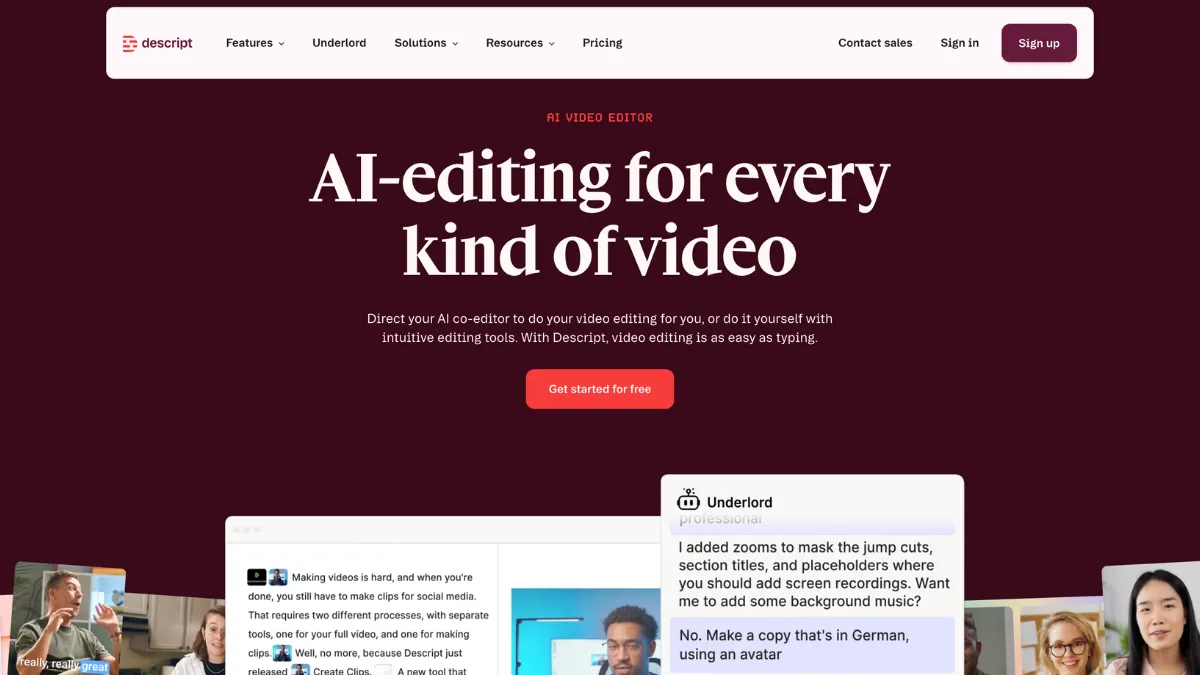
Descript is a fundamentally different proposition. It bundles voice cloning into a full audio and video editing environment through its Overdub feature, making it the strongest choice for podcasters and video producers who want everything in one application. The voice cloning is less capable than ElevenLabs' professional tier, but for users who would otherwise be switching between ElevenLabs and a separate editor on every project, Descript's integrated approach removes a persistent workflow friction. Castmagic is worth noting alongside Descript for teams that need transcription and repurposing of audio content as part of a broader production workflow.
ElevenLabs wins on voice quality and API depth. It loses on pricing predictability and workflow integration relative to tools that bundle editing alongside generation.
ElevenLabs Review: Final Verdict
ElevenLabs earns an overall score of 4.37 out of 5, which reflects a platform with a genuine, verifiable quality advantage in its core capability and a mature API, offset by pricing complexity that requires careful planning for mixed or high-volume workloads. The 4.8 on accuracy and reliability is the most important number here: the voices consistently do what they claim, and the platform infrastructure is stable enough to depend on for production. The 3.7 on cost-efficiency reflects the real friction of a credit model that punishes variable usage patterns and charges premium prices for the features, like professional cloning, that most serious users actually need.
The bottom line: if voice quality is the deciding factor and you are producing content where the difference between a convincing voice and a robotic one affects outcomes, ElevenLabs is the right platform. Go in with a clear understanding of your monthly credit consumption before selecting a tier.
How We Rated It:
More Tool Reviews


Subscribe to Stay in the loop
Get the latest AI and technology news, honest tool reviews, and practical guides delivered straight to your inbox.
Success! Check your Inbox!

Tezons Newsletter
The latest technology news, in-depth tool reviews, and practical guides - curated and delivered to your inbox.
Latest News



Have a question?
Have any questions?
Didn’t find what you were looking for? We’re just a message away.